
What Is a Metaphor for a Noisy Place?
A metaphor for a noisy place directly compares a loud environment to something known for making a lot of sound.
For example:
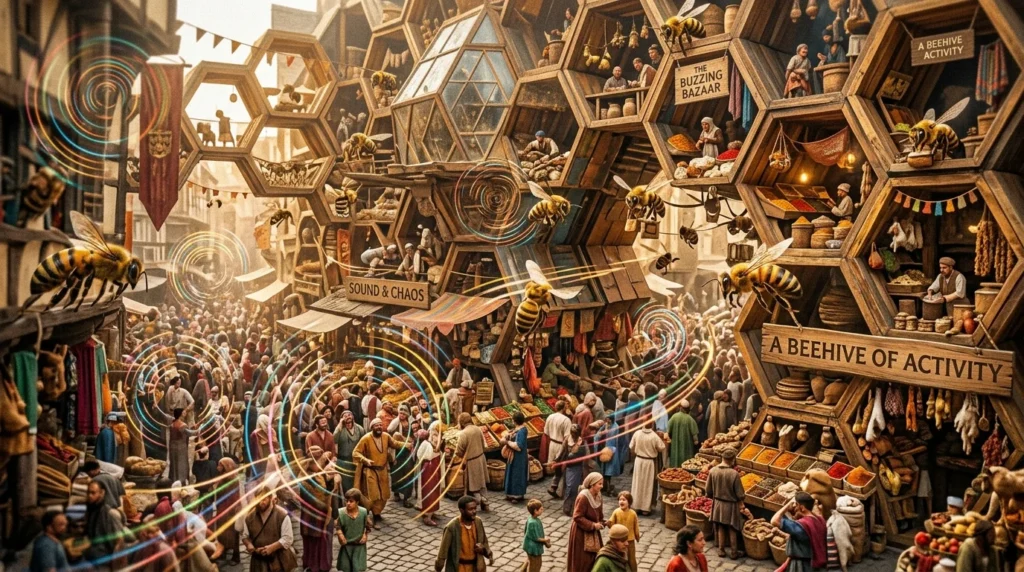
“The classroom was a beehive.”
This does not mean the classroom contained bees. It means the room was filled with constant activity and buzzing voices.
Quick Answer
A strong metaphor for a noisy place is:
“The place was a beehive of noise.”
Other useful metaphors include:
- A jungle of voices
- A battlefield of sound
- A roaring ocean
- A thunderstorm of noise
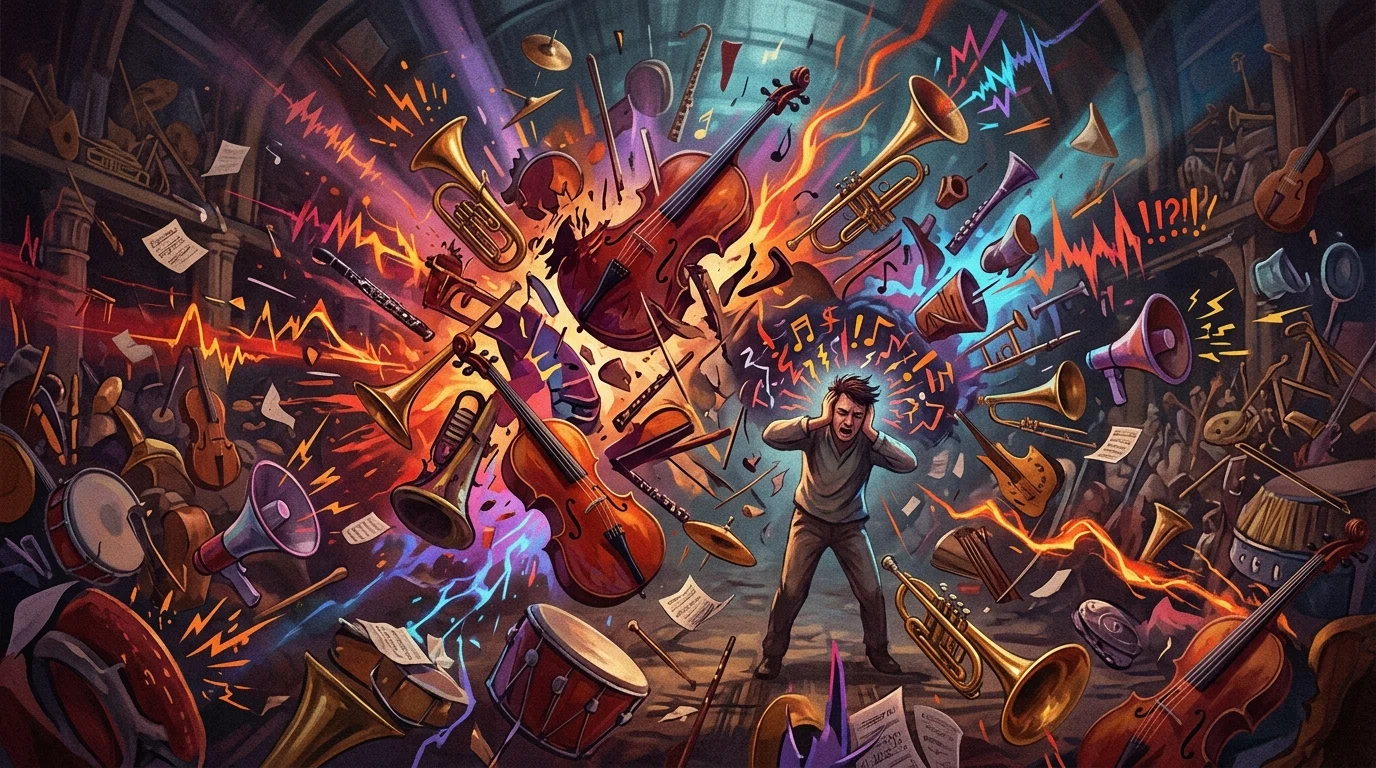
- A human orchestra tuning up
Why Use a Metaphor for a Noisy Place?
Metaphors help readers hear the scene in their imagination. The word noisy gives basic information, but a metaphor adds atmosphere and emotion.
Instead of:
“The market was very noisy.”
You could write:
“The market was a roaring ocean of voices.”
This helps readers imagine the constant waves of sound.
Metaphors can also show whether the noise feels:
- Exciting
- Chaotic
- Annoying
- Energetic
- Joyful
- Overwhelming
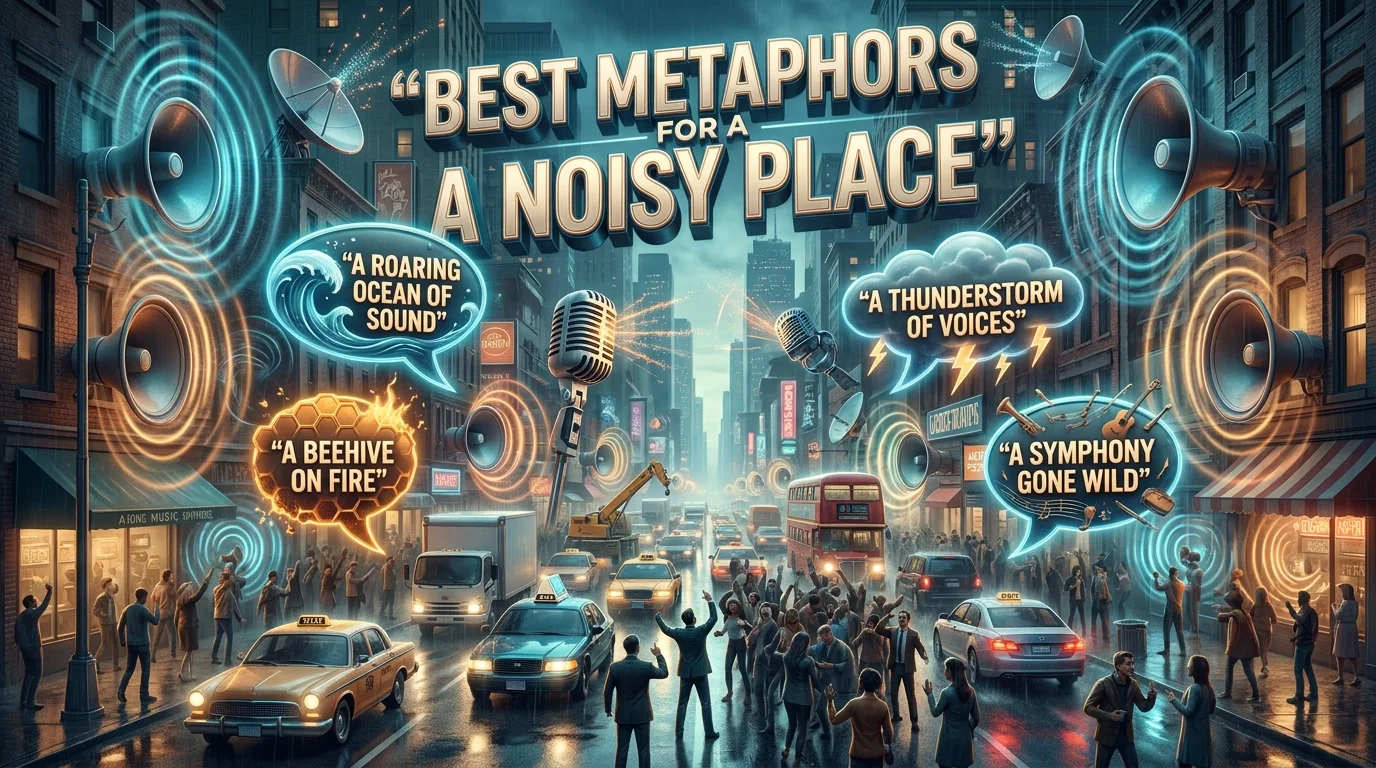
Best Metaphors for a Noisy Place
| Metaphor | Meaning |
|---|---|
| Beehive | Constant buzzing and activity |
| Jungle | Wild, unpredictable sounds |
| Battlefield | Loud and chaotic |
| Roaring ocean | Powerful waves of sound |
| Thunderstorm | Sudden and overwhelming noise |
| Human orchestra | Many different sounds together |
| Volcano | Noise ready to explode |
| Train station | Constant movement and voices |
| Carnival | Loud, lively, and exciting |
| Sound factory | Constant production of noise |
A Noisy Place as a Beehive
“The cafeteria was a buzzing beehive.”
This is one of the most common and effective metaphors for a busy, noisy place.
It suggests:
- Constant talking
- Movement
- Energy
- Activity
Example
“During lunch, the cafeteria became a buzzing beehive filled with laughter and conversation.”
A Noisy Place as a Jungle
“The playground was a jungle of voices.”
A jungle contains many different sounds happening at the same time, making it a useful metaphor for wild and unpredictable noise.
Example
“The hallway became a jungle of voices when the final bell rang.”
A Noisy Place as a Roaring Ocean
“The crowd was a roaring ocean.”
This metaphor works especially well when the noise rises and falls in waves.
Example
“The stadium was a roaring ocean, with cheers crashing from one side to the other.”
A Noisy Place as a Thunderstorm
“The room was a thunderstorm of voices.”
A thunderstorm suggests powerful, sudden, and overwhelming sound.
Example
“When the announcement was made, the classroom exploded into a thunderstorm of voices.”
A Noisy Place as a Battlefield
“The market was a battlefield of sound.”
This metaphor suggests loudness, confusion, and many competing noises.
Example
“The crowded street was a battlefield of horns, voices, and engines.”
Funny Metaphors for a Noisy Place
For humorous writing, try:
- The room was a zoo with microphones.
- The cafeteria was a concert nobody had rehearsed for.
- The classroom was a popcorn machine of voices.
- The bus was a karaoke contest without rules.
- The room was a blender full of conversations.
- The market was a thousand radios playing at once.
- The hallway was a human alarm clock that never stopped ringing.
Example
“The school bus was a karaoke contest without rules.”
Poetic Metaphors for a Noisy Place
For stories, poems, and descriptive writing:
- The city was an ocean of sound.
- The market was a river of voices.
- The crowd was a storm trapped between buildings.
- The street was a drumbeat that never slept.
- The room was a thundercloud of laughter.
- The playground was a symphony of chaos.
- The city was a living orchestra.
- The voices were waves crashing against one another.
- The noise was a wildfire racing through the room.
- The hall was a drum with a thousand beating hearts.
Simple Metaphors for a Noisy Place
If you need easy examples, try:
- The room was a beehive.
- The market was a jungle.
- The crowd was a roaring ocean.
- The classroom was a thunderstorm.
- The street was a battlefield of sound.
- The playground was a zoo.
- The cafeteria was a buzzing hive.
- The city was an orchestra.
- The hallway was a river of voices.
- The stadium was a volcano of cheers.
Metaphors for a Noisy Place in Sentences
For an Essay
“The crowded marketplace was a battlefield of sound, where voices and engines competed for attention.”
For a Story
“The hallway was a river of voices flowing around her as she searched for her classroom.”
For Descriptive Writing
“The cafeteria was a buzzing hive, alive with laughter, trays, and conversations.”
For a Funny Description
“The classroom was a zoo with better homework.”
For a Poem
“The city was a drum that never stopped beating.”
Metaphors for Different Types of Noise
| Type of Noise | Best Metaphor |
|---|---|
| Constant talking | Beehive |
| Wild and chaotic | Jungle |
| Loud cheering | Roaring ocean |
| Sudden loud noise | Thunderstorm |
| Confusing sounds | Battlefield |
| Fun and lively | Carnival |
| Many different voices | Orchestra |
| Endless city noise | Drumbeat |
| Loud excitement | Volcano |
| Busy conversations | River of voices |
Metaphor vs. Simile for a Noisy Place
A metaphor makes a direct comparison:
“The cafeteria was a beehive.”
A simile uses like or as:
“The cafeteria was like a beehive.”
Metaphors usually create a stronger and more direct image.
Easy Way to Remember
Metaphor = direct comparison
The market was a jungle.
Simile = uses “like” or “as”
The market was like a jungle.
How to Create Your Own Metaphor for a Noisy Place
Think About the Type of Noise
Ask yourself:
- Is it constant?
- Is it chaotic?
- Is it cheerful?
- Is it overwhelming?
- Does it rise and fall?
- Are many sounds happening together?
Match the Sound to an Image
| Sound | Image |
|---|---|
| Buzzing voices | Beehive |
| Wild noise | Jungle |
| Waves of cheering | Ocean |
| Explosive sound | Thunderstorm |
| Competing noises | Battlefield |
| Many sounds together | Orchestra |
Build a Direct Comparison
Instead of:
“The playground was extremely noisy.”
Write:
“The playground was a jungle of voices.”
The metaphor gives the reader a clearer picture and stronger atmosphere.
Common Mistakes When Using Noise Metaphors
Choosing an Image That Does Not Match the Noise
Make sure the metaphor reflects the type of sound you are describing.
For example, a beehive works well for constant buzzing, while a thunderstorm works better for sudden, powerful noise.
Using Too Many Metaphors
Avoid:
“The room was a jungle, ocean, beehive, and thunderstorm of sound.”
Choose one strong image.
Forgetting the Mood
Noise can feel exciting or unpleasant. Choose a metaphor that matches the emotion of the scene.
A carnival feels fun, while a battlefield feels chaotic and stressful.
Best Metaphor for a Noisy Place
If you need one simple and versatile option, use:
“The place was a buzzing beehive.”
For chaotic noise:
“The room was a jungle of voices.”
For powerful crowd noise:
“The stadium was a roaring ocean.”
For overwhelming sound:
“The room was a thunderstorm of voices.”
For funny writing:
“The place was a zoo with microphones.”