

What Is a Metaphor for Hardships?
A metaphor for hardships is a way of describing difficulty by comparing it to something else without using “like” or “as.”
For example:
- Life is a mountain with no clear path.
- Hardship is a heavy backpack we carry everywhere.
These comparisons help readers feel the struggle instead of just understanding it logically.
In creative writing, metaphors for hardships make emotional pain more visible. They turn abstract feelings into literary devices that connect deeply with readers. This is important in descriptive writing, poetry, and storytelling.
Quick List of Metaphors for Hardships Examples
- Life is a stormy ocean – constant emotional turbulence
- Hardship is a heavy chain – feeling trapped
- Struggle is a never-ending tunnel – no clear end
- Life is a cracked road – full of obstacles
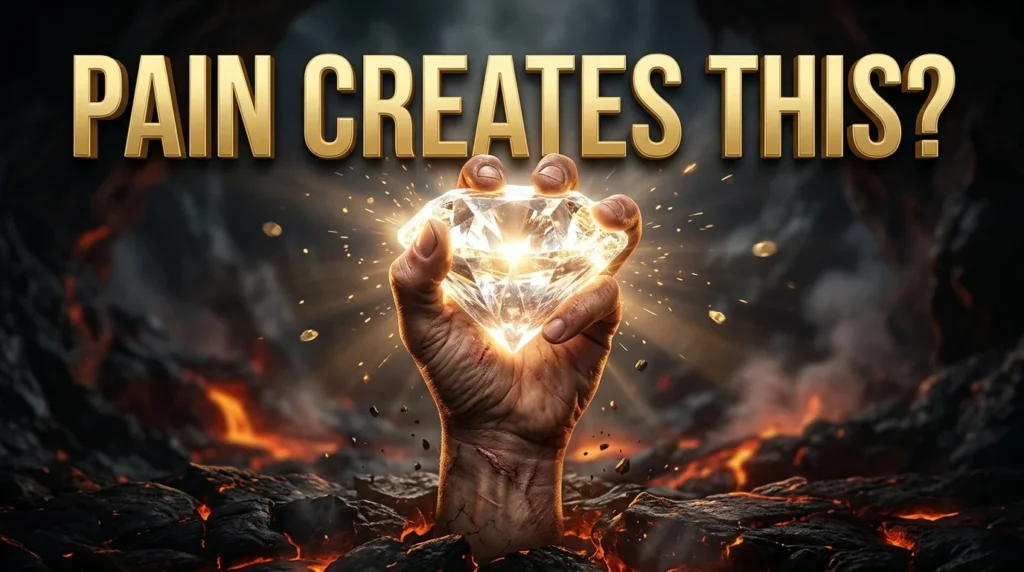
- Hard times are a burning fire – painful but transformative
- Struggle is a steep mountain – hard to climb
- Life is a broken compass – confusion and lost direction
- Hardship is a dark forest – fear of the unknown
- Struggle is a sinking boat – feeling overwhelmed
- Life is a frozen river – stuck and motionless
- Hardship is a heavy storm cloud – emotional weight
- Struggle is a maze with no exit – confusion
- Life is a shattered mirror – broken self-image
- Hardship is a long night – endless waiting
- Struggle is a battlefield – constant fight
- Life is a collapsing bridge – instability
- Hardship is a locked door – blocked opportunities
- Struggle is a rising flood – emotions taking over
- Life is a thorn-covered path – pain in every step
- Hardship is a heavy stone – emotional burden
Beautiful Metaphors for Hardships
Hardships in writing often become imagery that speaks directly to the heart.
- “A storm inside the soul” – emotional chaos and confusion
- “Walking through fire without shoes” – enduring intense pain
- “Carrying invisible mountains” – hidden emotional burdens
- “Drowning in silent waves” – feeling overwhelmed but quiet
- “A sky without stars” – loss of hope or direction
These metaphors help readers feel emotional depth through symbolism and poetic language.
Poetic and Deep Metaphors for Hardships Ideas
Writers often use deeper imagery for emotional impact:
- Hardship as a shadow that follows you everywhere
- Life as a book with torn pages
- Pain as ink spilled on clean paper
- Struggle as a candle burning in the wind
- Difficulty as roots growing through stone
These ideas are often used in poetry to express inner emotional battles using literary devices like imagery and symbolism.
Metaphor vs Simile
| Feature | Metaphor | Simile |
|---|---|---|
| Meaning | Direct comparison | Uses “like” or “as” |
| Grammar | No connecting words | Uses “like/as” |
| Emotional impact | Strong and deep | Softer and clearer |
| Example | Life is a storm | Life is like a storm |
| Common mistake | Too abstract | Overused comparisons |
Metaphors feel more intense, while similes are easier for beginners.
Why People Confuse Metaphors and Similes
Many learners mix up metaphors and similes because both compare ideas. In school, students often learn them together in figurative language lessons.
Confusion happens because:
- Both describe emotions creatively
- Both use comparisons
- Both appear in poems and stories
The difference is simple: metaphors say something is something else, while similes say it is like something else.
Real-Life Conversation Examples
1. School Stress
Student: “Exams feel like climbing a mountain with no end.”
Teacher: “Take it step by step.”
🎯 Lesson: Hardships can feel like physical effort in writing.
2. Emotional Talk
Friend: “Life right now is a broken road.”
Friend: “But every road can be repaired.”
🎯 Lesson: Metaphors express emotional pain clearly.
3. Poetry Writing
Writer: “My thoughts are a storm without rain.”
Teacher: “That’s powerful imagery.”
🎯 Lesson: Metaphors enhance creative writing.
4. Social Media Caption
User: “Today feels like a sinking ship.”
Comment: “Hope things get better.”
🎯 Lesson: Metaphors connect emotion with audience.
How to Create Your Own Metaphors for Hardships
To create strong metaphors:
- Think of your emotion clearly
- Match it with nature or objects
- Choose strong imagery (storm, fire, ocean)
- Add emotional depth
- Keep it simple but meaningful
Example process:
Hardship → feeling stuck → broken clock → “Life is a broken clock that never moves forward.”
Common Mistakes Beginners Make
- Using overly complex imagery → makes meaning unclear
- Mixing simile and metaphor → weakens impact
- Copying common phrases → loses originality
- Forgetting emotion → makes writing flat
Correction: Always connect the image to real feeling.
Related Figurative Language Terms
- Simile – comparison using like/as
- Imagery – descriptive language that creates pictures
- Personification – giving human traits to objects
- Symbolism – using objects to represent ideas
- Hyperbole – extreme exaggeration
These tools work together in creative writing and poetic language.