
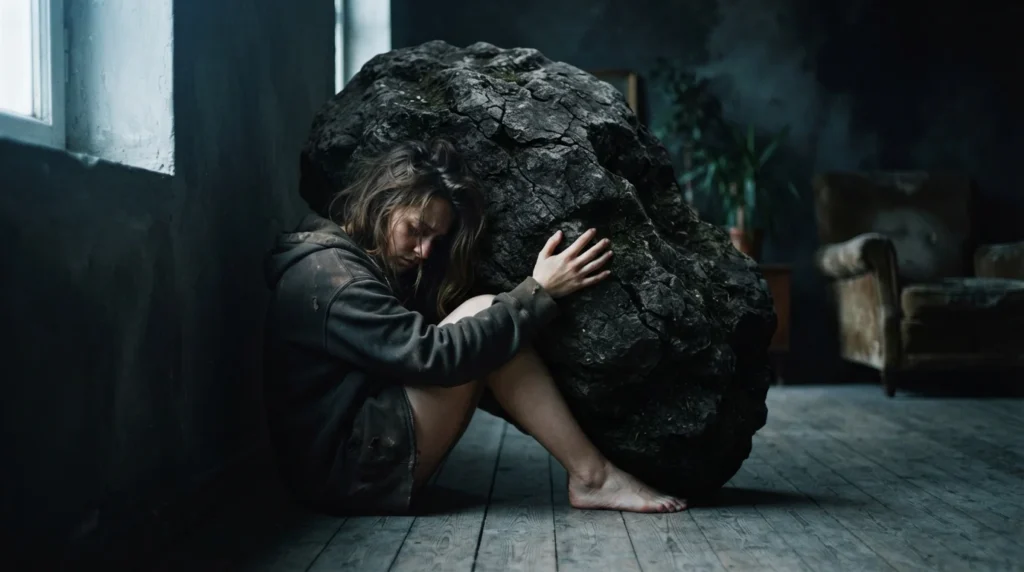
Feeling bad is something everyone experiences, but finding the right words to describe it isn’t always easy. Maybe you’re writing a story, a poem, a journal entry, or even a heartfelt message to a friend. Instead of simply saying, “I feel bad,” a vivid metaphor can paint a clearer picture of your emotions.
A well-chosen metaphor adds depth, emotion, and imagery to your writing. It helps readers understand not just what a character feels, but how those feelings weigh on the heart and mind. Writers, students, poets, and anyone learning creative writing often search for fresh ways to express sadness, guilt, disappointment, exhaustion, or emotional pain.
In this guide, you’ll discover more than 120 metaphors for feeling bad, learn how they work, understand the difference between a metaphor and a simile, and find practical tips for creating your own memorable expressions.
A metaphor for feeling bad compares emotional pain or discomfort to another object or experience without using “like” or “as.” Examples include “carrying a mountain,” “walking through fog,” “a cracked mirror,” and “a sinking ship.” These metaphors make emotions easier to imagine and more powerful in writing.
What Is a Metaphor for Feeling Bad?
A metaphor for feeling bad describes negative emotions by comparing them to something else.
Instead of saying:
I feel bad.
You might say:
I am carrying a mountain on my shoulders.
The second sentence creates stronger emotional imagery. Readers can almost feel the weight of the emotion.
These metaphors are useful in:
- Creative writing
- Poetry
- Fiction
- Journaling
- Speeches
- Song lyrics
- Personal essays
They make figurative language more engaging while helping readers connect emotionally.
Quick List of Metaphors for Feeling Bad
| Metaphor | Meaning |
|---|---|
| A heavy backpack | Carrying emotional burdens |
| Walking through fog | Feeling confused or lost |
| A cracked mirror | Feeling emotionally broken |
| A sinking ship | Losing hope |
| A wilted flower | Feeling drained |
| An empty room | Loneliness |
| A rainy sky | Sadness |
| A dying fire | Losing motivation |
| Frozen river | Hidden emotions |
| Broken wings | Feeling powerless |
| Dark tunnel | Difficult period |
| Rusting chain | Emotional exhaustion |
| Shadow over the heart | Lasting sadness |
| Torn sail | Life feels directionless |
| Fallen tree | Emotional collapse |
| Storm inside | Inner conflict |
| Silent thunder | Hidden pain |
| Crumbling bridge | Lost trust |
| Heavy clouds | Emotional stress |
| Empty battery | Burnout |
Beautiful Metaphors for Feeling Bad
Here are emotionally rich metaphors that create vivid descriptive writing.
1. A Storm Trapped Inside
Strong emotions rage quietly beneath the surface.
2. A Candle Fighting the Wind
Hope remains, but it struggles.
3. A Bird with Broken Wings
You want to move forward but can’t.
4. Winter Living in the Heart
Coldness replaces joy.
5. A Garden Without Rain
Emotions begin to dry up.
6. A Ship Without a Compass
Life feels uncertain.
7. A Book Missing Its Last Chapter
You feel incomplete.
8. An Echo in an Empty Cave
Loneliness keeps returning.
9. A Clock That Forgot Time
Everything feels disconnected.
10. A House with Dark Windows
The light inside has disappeared.
Poetic and Deep Metaphors for Feeling Bad
These expressions work especially well in poetry and emotional storytelling.
- My heart became a silent battlefield.
- My soul carried invisible stones.
- Hope was the last leaf of autumn.
- My smile wore a paper mask.
- My dreams drifted like abandoned boats.
- Darkness borrowed my voice.
- The sun forgot my window.
- My laughter became distant echoes.
- My spirit walked barefoot across ice.
- My memories became unopened letters.
- My mind was a room with no doors.
- Grief planted roots beneath my feet.
- My heart whispered in broken glass.
- My happiness became a fading photograph.
- Sorrow tied anchors to my thoughts.
Metaphors for Feeling Bad in Creative Writing
Good creative writing uses emotion instead of simply naming feelings.
Story Example
Sarah smiled at everyone, but inside she carried a backpack filled with stones.
Poetry Example
My heart folded itself into winter.
School Writing Example
The disappointment sat on my shoulders like an old traveler who refused to leave.
Personal Journal Example
Today felt like walking through endless rain without an umbrella.
Metaphor vs Simile
| Feature | Metaphor | Simile |
|---|---|---|
| Meaning | Direct comparison | Comparison using “like” or “as” |
| Grammar | Says one thing is another | Says one thing is like another |
| Emotional Impact | Stronger and more vivid | Softer and more descriptive |
| Example | My heart is ice. | My heart is like ice. |
| Common Mistake | Taking it literally | Forgetting “like” or “as” |
Why People Confuse Metaphors and Similes
Many beginners mix up these two literary devices because both compare things.
The biggest difference is simple:
A metaphor says something is another thing.
A simile says something is like another thing.
For example:
- Metaphor: My mind is a maze.
- Simile: My mind is like a maze.
Both create strong imagery, but metaphors usually sound more powerful and direct.
Real-Life Conversation Examples
At School
Emma: I failed my test.
Liam: You look upset.
Emma: My confidence is a cracked mirror today.
🎯 Lesson: A metaphor expresses emotion more vividly than simply saying “I’m sad.”
In a Poetry Class
Teacher: How would you describe grief?
Student: It feels like winter living inside me.
🎯 Lesson: Use symbolism and emotional imagery to deepen your writing.
Social Media Caption
“I’m smiling, but today my heart is carrying bricks.”
🎯 Lesson: Short metaphors can leave a lasting impression.
Talking to a Friend
Friend: Are you okay?
You: It feels like I’m walking through fog.
🎯 Lesson: Metaphors help explain emotions that are hard to describe.
How to Create Your Own Metaphor for Feeling Bad
Follow these simple steps.
1. Picture the Emotion
Ask yourself:
- Heavy?
- Cold?
- Empty?
- Broken?
2. Find a Matching Object
Examples:
- Rock
- Storm
- Fog
- Winter
- Shadow
3. Connect Them
Instead of saying:
I feel exhausted.
Write:
My spirit is an empty battery.
4. Keep It Simple
Simple metaphors often feel stronger than complicated ones.
Common Mistakes Beginners Make
Using Too Many Metaphors
One or two strong images are usually enough.
Mixing Different Images
Avoid:
“My heart was ice while flames burned inside.”
Choose one clear image instead.
Making Metaphors Too Complicated
Readers should understand the comparison quickly.
Explaining the Metaphor
Trust the image to speak for itself.
Related Figurative Language Terms
Simile
Compares two things using “like” or “as.”
Imagery
Creates mental pictures through descriptive language.
Personification
Gives human qualities to non-human things.
Symbolism
Uses objects or actions to represent deeper ideas.
Hyperbole
Uses exaggeration for dramatic effect.
Together, these literary devices make writing more expressive and memorable.
Frequently Asked Questions
What is the best metaphor for feeling bad?
“Walking through fog” is a popular metaphor because it expresses confusion, sadness, and uncertainty.
Is “my heart is heavy” a metaphor?
Yes. It compares emotional pain to physical weight without using “like” or “as.”
Can metaphors describe guilt?
Absolutely. Metaphors such as “carrying chains” or “a backpack full of stones” effectively represent guilt.
Are metaphors useful in creative writing?
Yes. They make emotions vivid, improve descriptive writing, and strengthen storytelling.
What’s the difference between a metaphor and symbolism?
A metaphor directly compares two things, while symbolism uses an object or idea to represent a deeper meaning.
Can I use metaphors in school essays?
Yes, when appropriate. They make your writing more engaging while demonstrating strong language skills.
Famous Symbolism Related to Feeling Bad
Throughout literature, writers have used symbols such as storms, winter, darkness, broken mirrors, fading flowers, empty roads, and silent oceans to represent sadness and emotional struggle. These symbols often appear alongside personification, imagery, and other forms of poetic language to help readers feel emotions rather than simply read about them.
By combining symbolism with thoughtful metaphors, writers create scenes that stay in the reader’s memory long after the story ends.
Conclusion
Finding the right metaphor for feeling bad can transform ordinary writing into something meaningful and memorable. Instead of simply naming an emotion, a well-crafted metaphor lets readers see, hear, and feel it through vivid figurative language. Whether you’re writing poetry, fiction, personal reflections, or school assignments, these comparisons add depth, imagery, and emotional connection. Keep experimenting with symbols, everyday objects, and nature to express your feelings in fresh ways. The more you practice creating metaphors, the more natural and powerful your creative writing will become, allowing your emotions to resonate with readers on a deeper level.