


What Is a Metaphor for a Long Walk?
A metaphor for a long walk is a figurative language technique that describes a lengthy walk as something else to express a deeper meaning.
Instead of saying:
“Life is like a long walk.”
A metaphor says:
“Life is a long road.”
This stronger comparison helps readers imagine emotions instead of simply reading about them.
In creative writing, metaphors make scenes richer by combining imagery, symbolism, and emotional depth. They are among the most powerful literary devices because they encourage readers to connect with the story on a personal level.
Quick List of Metaphors for a Long Walk
| Metaphor | Meaning |
|---|---|
| A winding road | Life filled with unexpected turns |
| A marathon without spectators | Quiet endurance |
| A river finding the sea | Steady progress |
| Climbing invisible mountains | Hidden struggles |
| Turning worn pages | Growing through experience |
| Following scattered stars | Chasing dreams |
| A bridge between yesterday and tomorrow | Transition |
| Carrying the sunrise | Hope moving forward |
| Walking through seasons | Personal change |
| An endless staircase | Constant effort |
| A slow-burning candle | Patience |
| Crossing silent deserts | Loneliness |
| Planting footprints | Leaving a legacy |
| A moving prayer | Spiritual reflection |
| A conversation with time | Aging and wisdom |
| Sailing on dry land | Persistence despite difficulty |
| A thread through history | Connecting generations |
| A dance with the horizon | Pursuing distant goals |
| A stitched path | Healing after hardship |
| A song without an ending | Lifelong learning |
| A map unfolding | Discovery |
| A ladder of memories | Looking back while moving ahead |
| A quiet revolution | Personal transformation |
| Chasing tomorrow | Hope for the future |
| A heartbeat across the earth | Human connection |
Beautiful Metaphors for a Long Walk
1. A River Searching for the Ocean
Every step carries purpose, even when the destination feels far away.
2. A Candle Burning Through the Night
The journey continues despite darkness and uncertainty.
3. A Thread Sewing Broken Days Together
Each mile helps heal old wounds.
4. A Slow Sunrise
Progress may seem small, but light keeps growing.
5. A Garden Growing One Step at a Time
Every footstep nurtures personal growth.
6. A Song Stretching Across the Hills
The walk becomes a melody that unfolds naturally.
7. A Key Unlocking Tomorrow
Every step opens new possibilities.
8. A Bridge Built with Footsteps
Progress creates connections between the past and the future.
9. A Compass Finding Home
The journey leads toward belonging.
10. A Quilt Sewn from Memories
Every mile adds another meaningful piece to life’s story.
Poetic and Deep Metaphors for a Long Walk
These expressions work beautifully in poetry and descriptive writing.
- Every mile was another heartbeat of hope.
- The road carried my thoughts like autumn leaves.
- My footsteps stitched silence into peace.
- Dawn unfolded beneath my shoes.
- The horizon whispered promises.
- Time walked beside me.
- The wind became my oldest friend.
- Every step erased yesterday.
- The earth remembered my story.
- The journey polished my soul.
- My shadow gathered wisdom.
- Hope wore hiking boots.
- The road drank my worries.
- Distance became my teacher.
- The trail wrote poetry beneath my feet.
Using Metaphors for a Long Walk in Creative Writing
In Stories
Instead of saying:
She walked for hours.
Write:
She carried tomorrow on her shoulders as the road stretched endlessly before her.
In Poetry
Instead of:
I kept walking.
Write:
Each step planted another star inside my heart.
In School Assignments
Instead of:
Success takes time.
Write:
Success is a mountain trail climbed one careful step at a time.
In Personal Journals
Instead of:
I felt better after walking.
Write:
The path quietly untied every knot inside me.
Metaphor vs. Simile
| Feature | Metaphor | Simile |
|---|---|---|
| Meaning | Says one thing is another | Compares using “like” or “as” |
| Grammar | Direct comparison | Indirect comparison |
| Emotional Impact | Stronger and more vivid | Gentle and descriptive |
| Example | Life is a long road. | Life is like a long road. |
| Common Mistake | Taking it literally | Forgetting “like” or “as” |
Why People Confuse Metaphors and Similes
Both compare two different things, so they often seem similar.
The key difference is simple.
A simile uses words such as like or as.
Example:
The journey was like climbing a mountain.
A metaphor removes those comparison words.
Example:
The journey was a mountain.
Both create imagery, but metaphors usually feel stronger because they make the comparison directly.
Real-Life Conversation Examples
School
Student: My homework feels impossible.
Teacher: Think of it as a mountain trail. One step at a time gets you to the top.
🎯 Lesson: A long walk can symbolize steady progress.
Classroom
Student: Why is learning so slow?
Teacher: Learning is a long walk through a forest. Every step helps you understand more.
🎯 Lesson: Growth happens gradually.
Poetry Writing
Friend: How can I describe healing?
Writer: Healing is a quiet road that teaches your heart to breathe again.
🎯 Lesson: Metaphors create emotional imagery.
Social Media Caption
Friend: Long hike today?
Reply: Today wasn’t just a hike—it was a conversation with the horizon.
🎯 Lesson: Metaphors make simple captions memorable.
Personal Reflection
Friend: How are you feeling?
Reply: I’m still walking my bridge toward brighter days.
🎯 Lesson: Symbolic language expresses emotions beautifully.
How to Create Your Own Metaphor for a Long Walk
Creating original metaphors becomes easier with practice.
1. Picture the Emotion
Ask yourself:
- Hope?
- Grief?
- Excitement?
- Peace?
- Determination?
2. Choose a Symbol
Examples include:
- River
- Mountain
- Lighthouse
- Garden
- Bridge
- Fire
- Sunrise
- Ocean
- Forest
- Compass
3. Connect the Two
For example:
- Hope is a sunrise.
- Healing is a forest path.
- Growth is a staircase.
- Courage is a bridge.
4. Add Sensory Details
Describe what readers can see, hear, or feel.
This strengthens descriptive writing and makes your metaphor more believable.
Common Mistakes Beginners Make
| Mistake | Why It Happens | Better Approach |
|---|---|---|
| Mixing too many metaphors | Trying to sound creative | Stick with one main image |
| Explaining the metaphor too much | Fear readers won’t understand | Trust the imagery |
| Using clichés | Familiar phrases feel easy | Create fresh comparisons |
| Forgetting the emotion | Focusing only on description | Match the metaphor to the feeling |
| Confusing metaphor and simile | Similar comparison styles | Check for “like” or “as” |
Related Figurative Language Terms
Simile
Compares two things using like or as.
Imagery
Uses descriptive language to create vivid mental pictures.
Personification
Gives human qualities to animals, objects, or ideas.
Symbolism
Uses objects or actions to represent deeper meanings.
Hyperbole
Uses intentional exaggeration for emphasis.
Together, these literary devices help writers create engaging poetic language and stronger emotional connections.
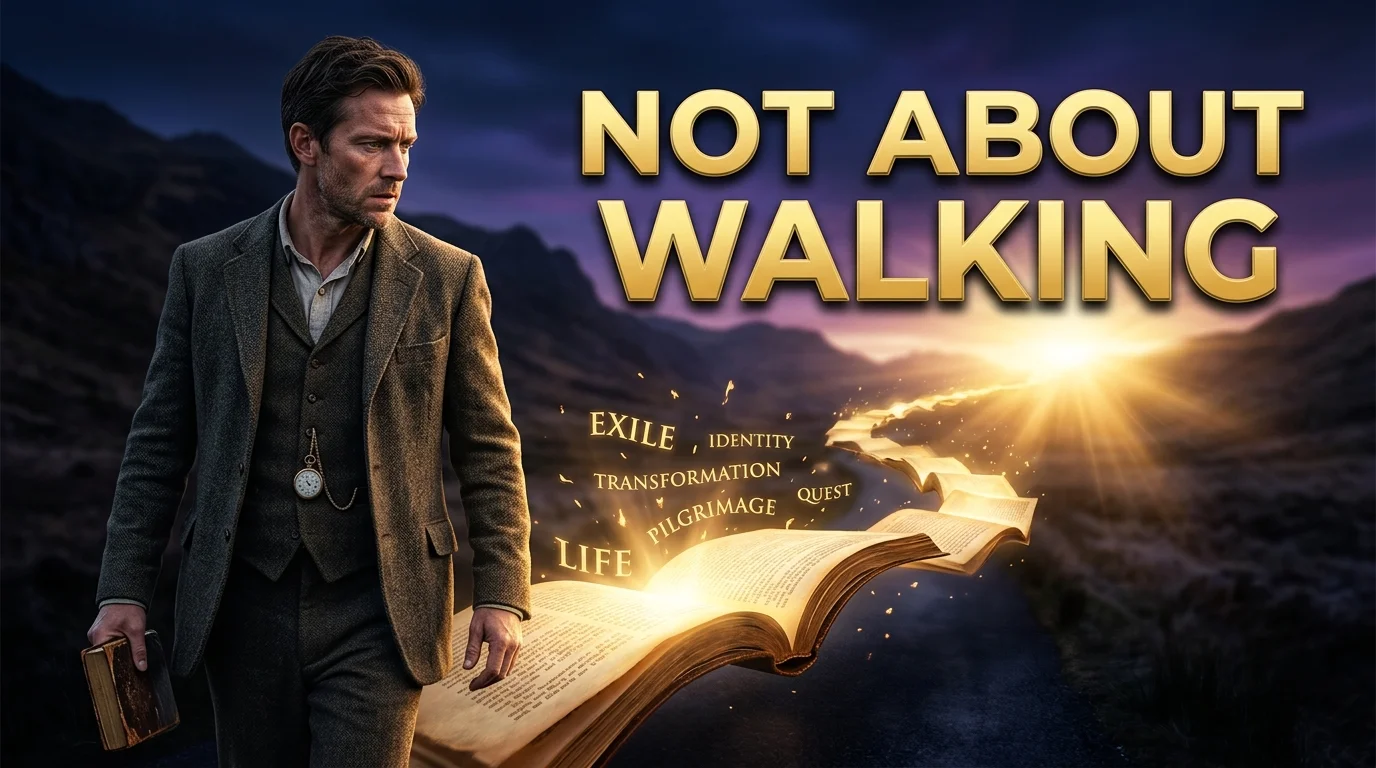
Literary Symbolism of Long Walks
Across literature, long walks often represent more than physical movement. They symbolize transformation, endurance, and self-discovery. A character who walks a great distance is frequently changing internally as much as externally.
Writers use these journeys to reveal courage, patience, forgiveness, or hope. The destination matters, but the emotional journey often matters even more. This blend of symbolism, creative writing, and emotional imagery makes the long walk one of literature’s most enduring metaphors.