
What Is a Metaphor for a House?
Quick Answer:
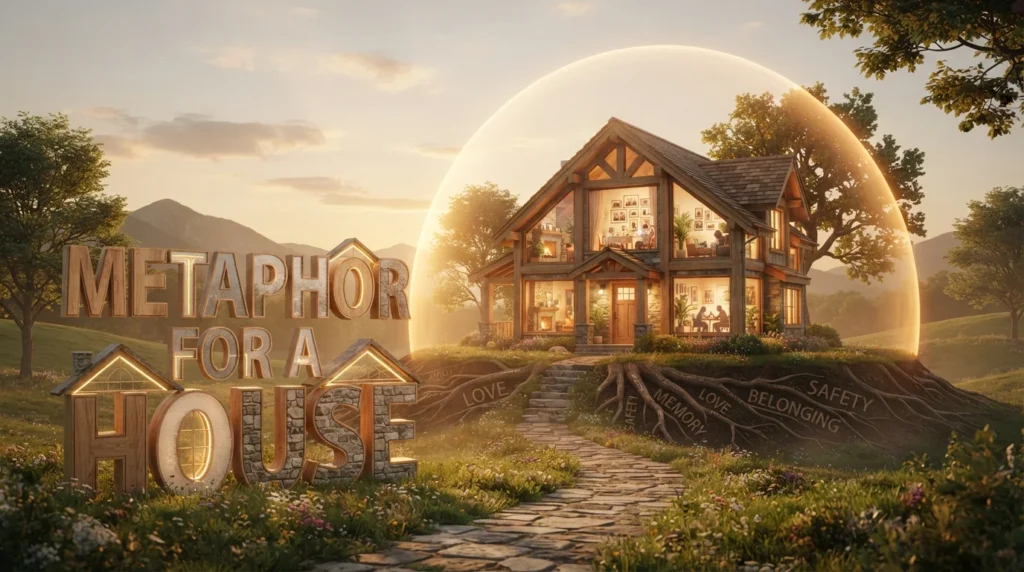
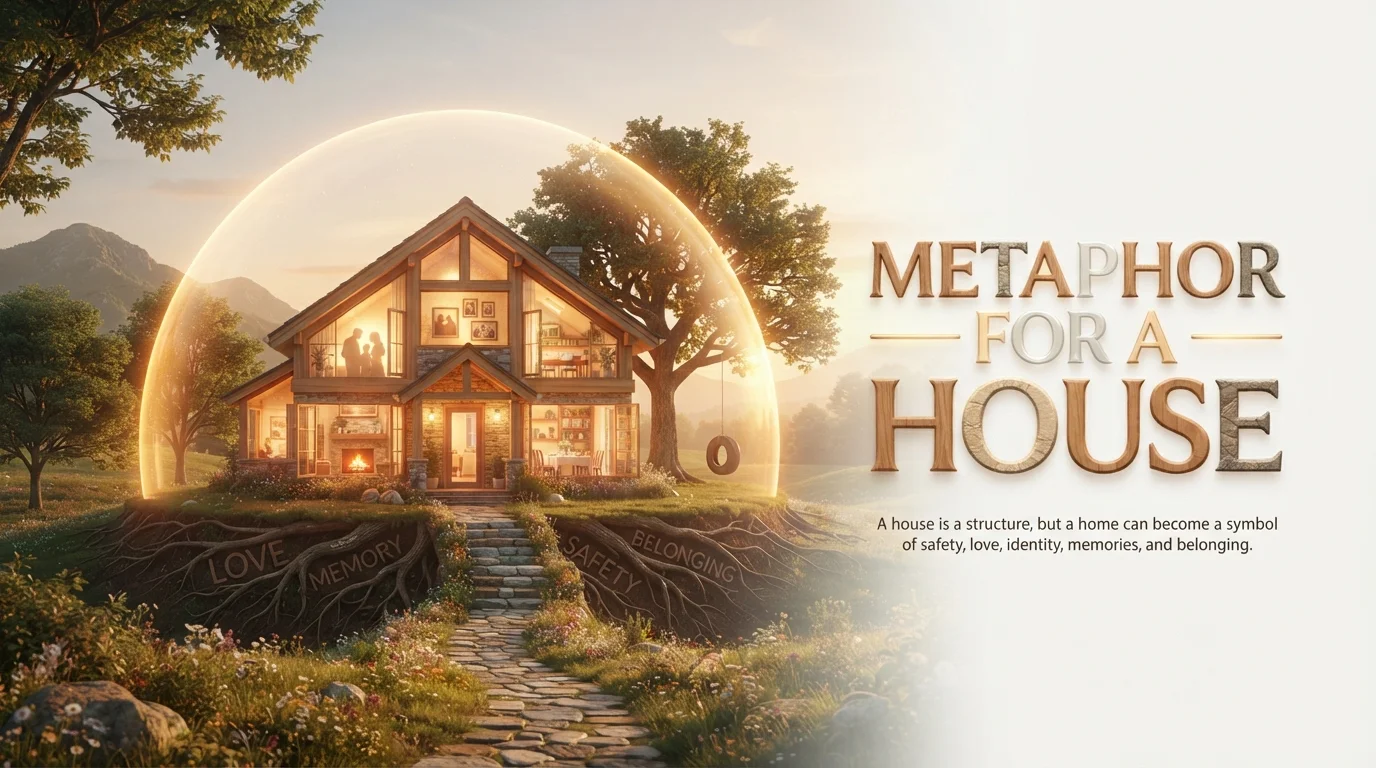
A metaphor for a house compares a house to something else without using “like” or “as.” It suggests that the house represents a deeper idea, emotion, or experience rather than simply being a physical structure.
For example:
- A house is a warm embrace.
- A house is a memory box.
- A house is an anchor in life’s storms.
Each metaphor gives the house symbolic meaning beyond bricks and walls.
Why Writers Use House Metaphors
House metaphors help readers connect emotionally with a piece of writing because houses are closely tied to everyday life.
They can represent:
- Security
- Family
- Identity
- Childhood
- Love
- Stability
- Dreams
- Change
- Loneliness
- Hope
Using metaphors makes descriptions richer and more memorable.
150+ Metaphor for a House
Home and Comfort Metaphors
- A warm blanket
- A safe harbor
- A gentle hug
- A cozy nest
- A peaceful sanctuary
- A welcoming hearth
- A protective shell
- A quiet retreat
- A comforting embrace
- A soft pillow
- A healing space
- A calm island
- A place of peace
- A cup of hot cocoa
- A sheltering tree
Family Metaphors
- The heart of the family
- A family tree with walls
- A gathering place
- A shared heartbeat
- A bridge between generations
- A memory keeper
- A cradle of love
- A circle of belonging
- The family’s anchor
- A living scrapbook
- A woven tapestry
- A nest of togetherness
- A homegrown garden
- A foundation of love
- A fireplace of memories
Stability Metaphors
- An anchor
- A mountain
- A fortress
- A lighthouse
- A solid rock
- A sturdy oak
- A dependable compass
- A protective wall
- A strong backbone
- A steady hand
- A rooted tree
- A castle
- A pillar of strength
- A shelter from storms
- A reliable bridge
Memory Metaphors
- A time capsule
- A photo album
- A treasure chest
- A living museum
- A scrapbook
- A diary
- A memory vault
- A storybook
- A keepsake box
- A collection of echoes
- A gallery of moments
- A woven quilt
- A songbook
- A history book
- A family journal
Growth Metaphors
- A seedling
- A growing tree
- A blooming garden
- A classroom
- A launching pad
- A workshop
- A greenhouse
- A canvas
- A stepping stone
- A ladder
- A foundation for dreams
- A nursery for ambitions
- A training ground
- A fertile field
- A springboard
Love Metaphors
- A heart
- A love letter
- A warm fireplace
- A gentle embrace
- A shared dream
- A promise kept
- A wedding ring
- A candle in darkness
- A safe haven
- A garden of affection
- A melody
- A quiet kiss
- A woven blanket
- A pair of open arms
- A lasting flame
House Metaphors for Change
- A butterfly chrysalis
- A new chapter
- A fresh canvas
- A blank page
- A crossroads
- A bridge
- A sunrise
- A turning tide
- A new beginning
- A doorway to tomorrow
- A path forward
- A seed becoming a tree
- A rebirth
- A launching dock
- A gateway
House Metaphors for Loneliness
- An empty shell
- A silent museum
- A forgotten castle
- A ghost ship
- A deserted island
- A hollow echo
- A sleeping giant
- A frozen lake
- A locked diary
- A vacant stage
- A lonely lighthouse
- A fading photograph
- A dim lantern
- A broken melody
- A quiet cave
House Metaphors for Hope
- A sunrise
- A beacon
- A candle
- A lighthouse
- A new dawn
- A guiding star
- A blooming flower
- A rainbow
- A fresh beginning
- A spark
- A compass
- A doorway to dreams
- A rising tide
- A steady flame
- A promise of tomorrow
Creative House Metaphors
- A puzzle
- A symphony
- A castle of dreams
- A living heartbeat
- A woven story
- A silent guardian
- A mirror of its owners
- A breathing memory
- A treasure island
- A hidden world
- A canvas of life
- A pocket of happiness
- A woven nest
- A compass for life
- A stage for everyday stories
Nature-Inspired House Metaphors
- A bird’s nest
- A sturdy oak
- A mountain cave
- A flowing riverbank
- A blooming meadow
- A protective forest
- A seashell
- A beehive
- A quiet valley
- A flowering vine
- A coral reef
- A treehouse of dreams
- A moss-covered stone
- A willow tree
- A fertile garden
House Metaphors by Emotion
| Emotion | Metaphor |
|---|---|
| Love | A warm embrace |
| Safety | A fortress |
| Peace | A sanctuary |
| Stability | An anchor |
| Happiness | A blooming garden |
| Hope | A lighthouse |
| Loneliness | An empty shell |
| Growth | A greenhouse |
| Memory | A time capsule |
| Strength | A mountain |
How to Choose the Right House Metaphor
Quick Answer:
Choose a house metaphor based on the emotion or idea you want to express. A metaphor should match your writing’s tone and help readers visualize your message.
For example:
| Purpose | Best Metaphor |
|---|---|
| Family | A shared heartbeat |
| Childhood | A memory box |
| Stability | An anchor |
| Love | A warm embrace |
| Change | A new chapter |
| Hope | A lighthouse |
| Loneliness | An empty shell |
| Growth | A greenhouse |
Examples of House Metaphors in Sentences
- Their house was an anchor, keeping the family steady through difficult times.
- Grandma’s home became a time capsule, preserving decades of cherished memories.
- After years of travel, his little cottage felt a warm embrace.
- The old farmhouse stood as a silent guardian over generations.
- Their new home became a blank canvas for fresh beginnings.
- The family cabin remained a lighthouse, guiding everyone back during the holidays.
- Her apartment was a sanctuary after long workdays.
- The abandoned mansion became a ghost ship, drifting through forgotten memories.
- The tiny home was a bird’s nest, small yet full of comfort.
- Their first house became a storybook, with every room holding another chapter.
Common Mistakes When Using House Metaphors
- Choosing a metaphor that doesn’t fit the emotion.
- Mixing unrelated metaphors in the same paragraph.
- Overusing metaphors until they lose impact.
- Using clichés without adding fresh context.
- Explaining the metaphor too much instead of letting it resonate.
Best Practices for Writing House Metaphors
- Match the metaphor to your theme.
- Keep comparisons clear and meaningful.
- Use original imagery when possible.
- Let the metaphor support your message, not overshadow it.
- Read your sentence aloud to ensure it sounds natural.