
What Is a Metaphor for a Traitor?
A metaphor for a traitor directly compares a disloyal person to something associated with deception, danger, or broken trust.
For example:
“He was a wolf wearing the mask of a friend.”
This suggests that the person appeared loyal while secretly intending harm.
Quick Answer
One of the strongest metaphors for a traitor is:
“A traitor is a snake in the grass.”
Other options include:
- A wolf in sheep’s clothing
- A dagger hidden behind a smile
- A crack in the foundation
- A poisoned seed
- A broken compass
- A shadow wearing a friend’s face
- A fire burning from within
Best Metaphors for a Traitor
| Metaphor | Meaning |
|---|---|
| A snake in the grass | Hidden danger and betrayal |
| A wolf in sheep’s clothing | Deception behind innocence |
| A dagger behind a smile | Secret betrayal |
| A crack in the foundation | Hidden weakness or disloyalty |
| A poisoned seed | Betrayal that grows over time |
| A shadow wearing a friend’s face | False friendship |
| A broken bridge | Destroyed trust |
| A fire within the walls | Internal betrayal |
| A rotten beam | Hidden damage |
| A false coin | Something that appears genuine but is not |
A Traitor as a Snake in the Grass
“The traitor was a snake in the grass.”
This metaphor emphasizes hidden danger and unexpected betrayal.
Example
“They trusted him completely, never realizing that a snake in the grass had been standing beside them all along.”
A Traitor as a Wolf in Sheep’s Clothing
“He was a wolf in sheep’s clothing.”
This describes someone who hides harmful intentions behind a harmless appearance.
Example
“His friendly words hid the truth: he was a wolf in sheep’s clothing.”
A Traitor as a Dagger Behind a Smile
“She was a dagger hidden behind a smile.”
This metaphor emphasizes betrayal by someone who appears friendly.
Example
“Every smile seemed genuine until they discovered the dagger hidden behind it.”
A Traitor as a Crack in the Foundation
“A traitor is a crack in the foundation.”
A foundation supports a structure, and a hidden crack can eventually cause serious damage.
Example
“His betrayal was a crack in the foundation of their friendship, widening until everything collapsed.”
A Traitor as a Fire Within the Walls
“A traitor is a fire burning from within.”
This metaphor represents danger coming from inside a group rather than from an outside enemy.
Example
“The kingdom feared enemies at its borders but failed to notice the fire burning within its own walls.”
Creative Metaphors for a Traitor
Here are more imaginative examples:
- A traitor is a shadow wearing a friend’s face.
- A traitor is a key that locks the door instead of opening it.
- A traitor is a poisoned well among trusted fields.
- A traitor is a rotten plank in a bridge.
- A traitor is a storm hiding behind clear skies.
- A traitor is a false note in a familiar song.
- A traitor is a loose thread unraveling a tapestry.
- A traitor is a candle burning the house from inside.
- A traitor is a mirror that reflects lies.
- A traitor is a hand that shakes yours while holding a knife behind its back.
Poetic Metaphors for a Traitor
For stories, poems, or dramatic writing:
“He was winter hiding inside spring.”
“She was a shadow wearing the face of daylight.”
“The traitor was a worm inside the fruit of trust.”
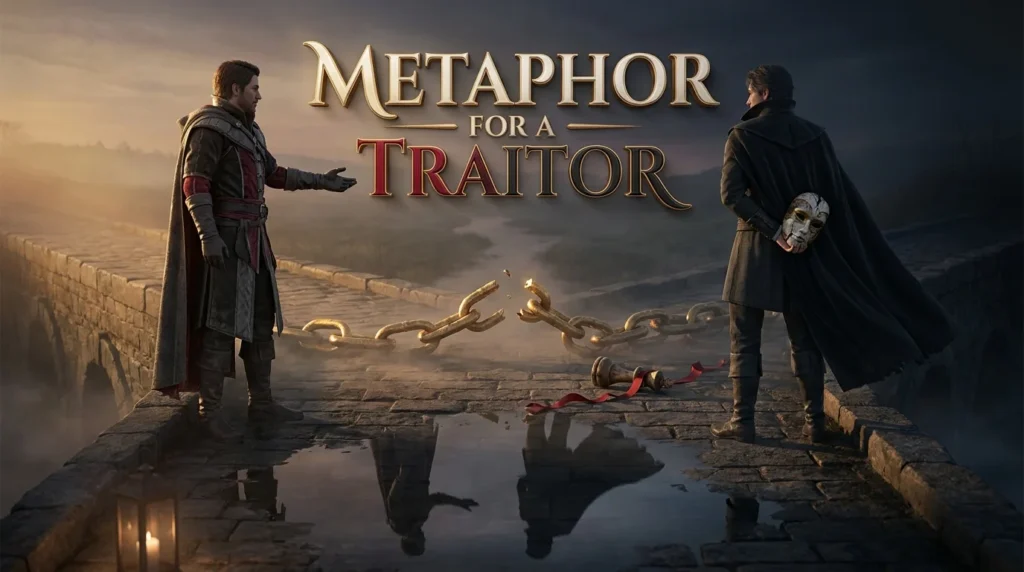
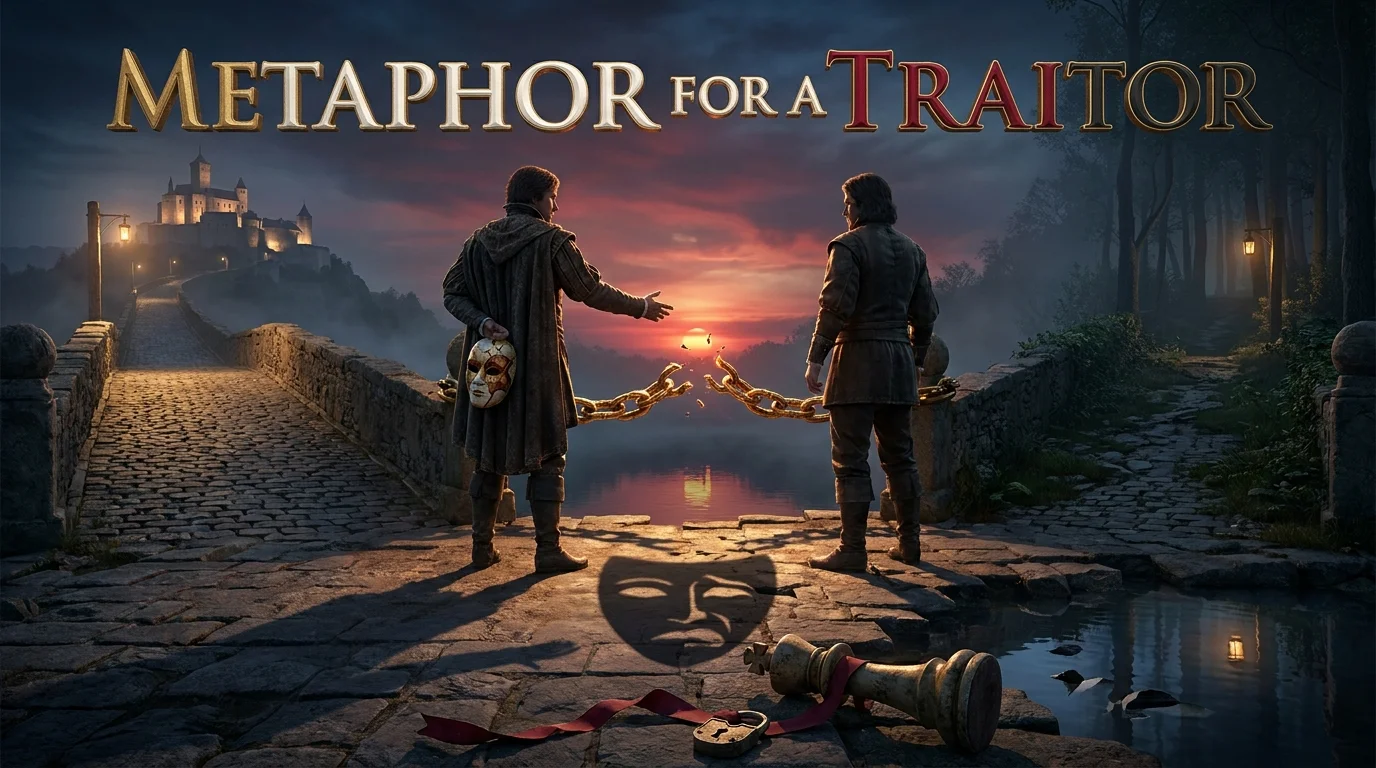
“His loyalty was a mask with betrayal breathing behind it.”
“She was the crack that waited quietly inside the glass.”
“He was a familiar song with one poisonous note.”
“The enemy had not crossed the border; it had been sitting at their table.”
“His friendship was a bridge built over an empty river.”
Simple Metaphors for a Traitor
- A snake in the grass
- A wolf in sheep’s clothing
- A dagger behind a smile
- A crack in the foundation
- A poisoned seed
- A shadow wearing a friend’s face
- A fire within the walls
- A rotten beam
- A broken bridge
- A false coin
Metaphors for Different Types of Betrayal
| Type of Betrayal | Metaphor |
|---|---|
| Hidden betrayal | A snake in the grass |
| False friendship | A shadow wearing a friend’s face |
| Secret harm | A dagger behind a smile |
| Internal betrayal | A fire within the walls |
| Broken trust | A shattered bridge |
| Slow betrayal | A poisoned seed |
| Hidden weakness | A crack in the foundation |
| Deception | A false coin |
| Group betrayal | A rotten beam |
| Sudden betrayal | A knife in the back |
Metaphor for a Traitor in Friendship
“A false friend is a shadow that disappears when darkness comes.”
This metaphor suggests someone who appears supportive only when things are easy.
Example
“He had mistaken a shadow for a friend until the difficult days arrived.”
Metaphor for Betrayal
“Betrayal is a knife cutting the rope of trust.”
Example
“One lie became the knife that cut the rope holding their friendship together.”
Metaphor for Hidden Disloyalty
“Disloyalty is a worm inside the fruit.”
The fruit may appear healthy on the outside while being damaged within.
Example
“Their team looked united, but disloyalty was a worm eating away at the fruit from the inside.”
How to Choose the Right Metaphor for a Traitor
For Hidden Danger
Use:
“A snake in the grass.”
For Deception
Use:
“A wolf in sheep’s clothing.”
For False Friendship
Use:
“A dagger behind a smile.”
For Internal Betrayal
Use:
“A fire within the walls.”
For Broken Trust
Use:
“A crack in the foundation.”
For Poetic Writing
Use:
“A shadow wearing a friend’s face.”
Common Mistakes When Using Traitor Metaphors
Using Too Many Metaphors Together
Avoid:
“He was a snake, wolf, dagger, fire, crack, and shadow.”
Choose one powerful image.
Making the Metaphor Too Literal
A metaphor should suggest betrayal rather than simply repeating the meaning.
Instead of:
“He was a bad person who betrayed everyone.”
Try:
“He was a fire burning quietly inside the walls they trusted.”
Ignoring the Emotional Tone
Some metaphors sound dramatic, while others sound subtle. Choose one that matches your writing.
Best Metaphors for a Traitor
For general use:
“A traitor is a snake in the grass.”
For deception:
“A traitor is a wolf in sheep’s clothing.”
For false friendship:
“A traitor is a dagger hidden behind a smile.”
For internal betrayal:
“A traitor is a fire burning within the walls.”
For broken trust:
“A traitor is a crack in the foundation.”
For poetic writing:
“A traitor is a shadow wearing a friend’s face.”