
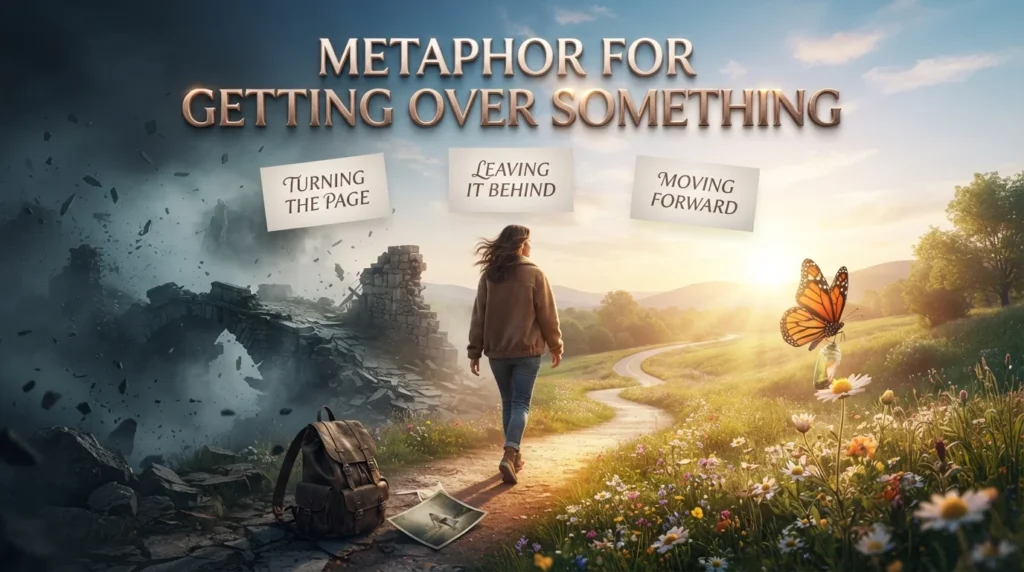
What Is a Metaphor for Getting Over Something?
A metaphor for getting over something compares emotional or personal progress to a familiar action, journey, place, or transformation.
For example:
“I finally turned the page.”
Turning a page literally means moving to the next part of a book, but metaphorically it can mean leaving an old chapter of life behind.
Other common images include:
- Crossing a bridge
- Closing a chapter
- Leaving a storm
- Climbing a mountain
- Breaking free from chains
- Planting new roots
- Opening a new door
- Sailing toward a new shore
These metaphors make the idea of moving forward more vivid and emotional.
25 Metaphors for Getting Over Something
1. Turning the Page
“I finally turned the page.”
This is one of the most natural metaphors for moving beyond a past experience.
It suggests that the previous chapter still exists, but you are no longer living inside it.
2. Closing a Chapter
“That part of my life is a closed chapter.”
A chapter represents a period of life. Closing it suggests acceptance and readiness to move into something new.
3. Crossing a Bridge
“I crossed the bridge and stopped looking back.”
A bridge connects two places. Crossing it can symbolize moving from the past into a new stage of life.
4. Leaving the Storm Behind
“The storm has passed, and I can finally see clearly.”
A storm represents emotional difficulty, confusion, or pain. Leaving it behind suggests that the hardest period has ended.
5. Climbing Out of a Valley
“I spent months in the valley, but now I am climbing toward the light.”
A valley can represent a low or difficult period. Climbing upward symbolizes recovery and progress.
6. Breaking Free From Chains
“I finally broke the chains of the past.”
Chains represent emotional attachment, regret, fear, or memories that keep someone stuck.
This metaphor emphasizes freedom.
7. Opening a New Door
“Closing that door allowed me to open another.”
A door represents opportunity or a new stage. Closing one door symbolizes leaving something behind, while opening another represents moving forward.
8. Walking Into the Sunrise
“I stopped chasing yesterday and started walking toward the sunrise.”
Sunrise represents hope, renewal, and a fresh beginning.
9. Putting Down a Heavy Backpack
“I finally put down the backpack I had been carrying for years.”
The backpack represents emotional baggage.
This metaphor is especially effective when describing the release of regret, resentment, or painful memories.
10. Letting the River Carry It Away
“I placed the past in the river and let the current carry it away.”
The river represents time and continued movement.
The metaphor suggests releasing something rather than constantly fighting it.
11. Outgrowing an Old Skin
“I had to shed my old skin before I could become someone new.”
This metaphor compares personal growth to an animal shedding an old layer.
It emphasizes transformation.
12. Leaving an Old House
“I moved out of the house my memories had built.”
The house represents a mental or emotional space occupied by the past.
Leaving it suggests creating distance from old experiences.
13. Untying the Knot
“Time slowly untied the knot in my heart.”
A knot represents emotional complexity, pain, or unresolved feelings.
Untying it suggests gradually finding peace.
14. Putting Out the Fire
“The fire that once consumed me has finally gone out.”
Fire can symbolize intense emotions such as anger, grief, or heartbreak.
The metaphor suggests that the intensity has faded.
15. Breaking the Spell
“I finally broke the spell of the past.”
A spell represents something that seems to hold you emotionally or mentally.
Breaking it suggests seeing the situation differently and regaining perspective.
16. Stepping Out of the Shadow
“I stepped out of the shadow of what happened.”
A shadow can represent a past experience that continues to affect the present.
Stepping into the light suggests freedom and renewed confidence.
17. Planting New Roots
“I stopped living in yesterday and planted new roots.”
Roots represent stability, belonging, and a new foundation.
This metaphor works especially well for major life changes.
18. Leaving the Old Shore
“I left the old shore and began sailing toward something new.”
The shore represents a familiar but finished stage of life.
The journey across the water represents moving forward.
19. Removing an Old Photograph
“I stopped staring at the old photograph and started taking new pictures.”
The photograph represents memories.
The new pictures symbolize creating new experiences instead of remaining focused on the past.
20. Rebuilding After the Fire
“The fire destroyed the old structure, but I learned to build again.”
This metaphor emphasizes resilience.
It suggests that getting over something does not always mean returning to who you were; sometimes it means creating something new.
21. Releasing the Anchor
“I finally pulled up the anchor and started moving.”
An anchor keeps a boat in one place. Metaphorically, it can represent something preventing progress.
Releasing it symbolizes freedom and forward movement.
22. Removing a Stone From Your Shoe
“Once I stopped carrying that stone, the journey became easier.”
The stone represents a persistent problem or painful memory.
This metaphor is useful because it suggests that something small can still make the entire journey uncomfortable.
23. Waking From a Long Dream
“I woke up from the dream and finally saw things clearly.”
The dream can represent an unrealistic hope, attachment, or belief about the past.
Waking suggests gaining clarity.
24. Watching a Train Leave
“I watched the train disappear and realized I didn’t need to chase it.”
The departing train represents something that has already passed.
The metaphor emphasizes acceptance rather than continued pursuit.
25. Walking Beyond the Finish Line
“I crossed the finish line and kept walking.”
The finish line represents the end of a difficult period.
Continuing to walk suggests that recovery is not merely about ending something but beginning what comes next.
Metaphors for Getting Over Someone
Getting over a person is one of the most common situations where people use metaphors.
Closing an Old Chapter
“I finally closed the chapter without needing to rewrite the ending.”
This suggests acceptance.
Releasing an Anchor
“I stopped letting the memory anchor me to the past.”
This emphasizes emotional freedom.
Leaving the Old Shore
“I left that shore and started sailing toward a different horizon.”
This creates a sense of distance and possibility.
Taking Off an Old Coat
“I took off the coat of yesterday and stepped into a new season.”
The coat represents an identity or emotional state that no longer fits.
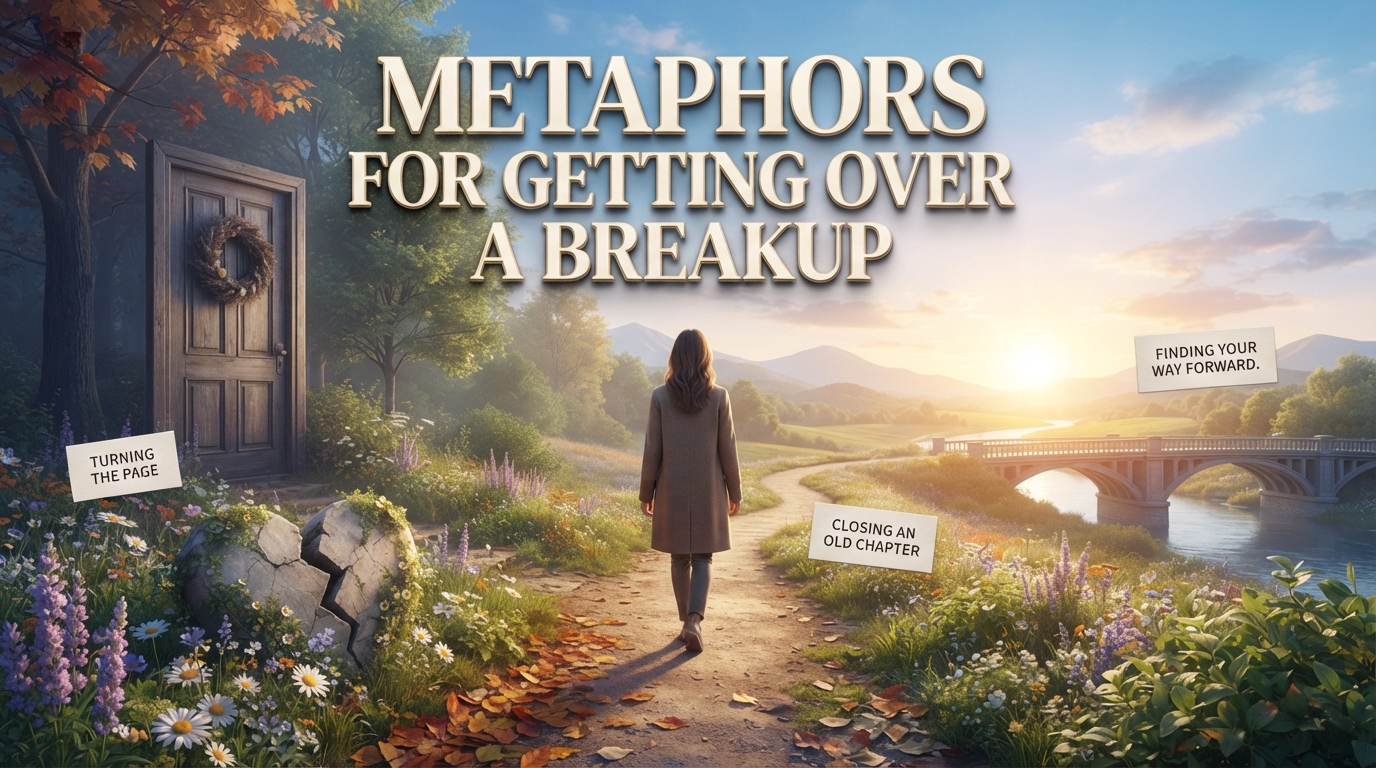
Metaphors for Getting Over a Breakup
A breakup can be described through several different images depending on the emotional tone.
| Metaphor | Meaning |
|---|---|
| Closing a chapter | Accepting that the relationship has ended |
| Crossing a bridge | Moving into a new stage |
| Releasing an anchor | Stopping emotional attachment |
| Turning the page | Beginning something new |
| Leaving the storm | Recovering from emotional turmoil |
| Planting new roots | Building a new life |
| Opening a new door | Embracing new possibilities |
| Putting out the fire | Letting intense emotions fade |
For example:
“The relationship was a chapter I needed to finish, not a book I needed to keep rereading.”
Metaphors for Getting Over a Bad Experience
When the issue is not romantic, journey and transformation metaphors often work well.
Crossing a Bridge
“That experience was a bridge I had to cross, not a place I had to live.”
Leaving the Storm
“The storm changed me, but it did not have to become my climate.”
Climbing a Mountain
“Every difficult step carried me farther from the place where I started.”
Shedding an Old Skin
“I left that version of myself behind like an old skin.”
These metaphors focus on growth rather than simply forgetting.
Metaphors for Letting Go
Getting over something does not necessarily mean forgetting it. Sometimes it means accepting that you cannot change it.
Letting the River Flow
“I stopped fighting the current and let the river carry the past away.”
Opening Your Hand
“I opened my hand and let go of what I could no longer hold.”
Releasing a Balloon
“I released the balloon and watched my worries disappear into the sky.”
Dropping a Stone
“I dropped the stone I had been carrying and continued the journey.”
These metaphors emphasize release and acceptance.
Metaphors for Moving On
Moving on is often best represented by movement.
Walking Toward Sunrise
The sunrise represents a new beginning.
Sailing Toward a New Shore
The new shore represents a different future.
Opening a New Door
The door represents an opportunity that becomes visible after something ends.
Following a New Road
The road represents a new direction.
Example:
“The old road ended, but that did not mean the journey was over.”
Metaphors for Healing From the Past
Healing metaphors often use nature because recovery is gradual rather than instant.
A Wound Becoming a Scar
“The wound became a scar, and the scar became part of my story.”
A scar represents an experience that remains part of your history without being an active wound.
A Garden Growing Again
“After the winter, the garden slowly found its color again.”
The garden represents emotional life returning after a difficult period.
A Tree Growing New Branches
“The broken branch did not stop the tree from reaching toward the sky.”
This metaphor emphasizes resilience and continued growth.
How to Choose the Right Metaphor
The best metaphor depends on what you want the reader to feel.
For Acceptance
Use:
- Closing a chapter
- Turning the page
- Crossing a bridge
- Watching a train leave
For Emotional Freedom
Use:
- Breaking chains
- Releasing an anchor
- Opening your hand
- Putting down a heavy backpack
For Healing
Use:
- A wound becoming a scar
- Leaving a storm
- Growing a garden
- Climbing out of a valley
For New Beginnings
Use:
- Walking into sunrise
- Opening a new door
- Planting new roots
- Sailing toward a new shore
For Personal Growth
Use:
- Shedding an old skin
- Rebuilding after a fire
- Climbing a mountain
- Following a new road
Common Mistakes When Using These Metaphors
Making the Metaphor Too Complicated
A simple image is often stronger than an elaborate comparison.
Instead of creating several comparisons at once, choose one central image and develop it naturally.
Confusing Forgetting With Moving On
Getting over something does not necessarily mean erasing it from memory. A metaphor such as turning the page works because the previous page still exists.
Using an Overly Dramatic Image
Not every situation needs a metaphor about destruction or catastrophe. Sometimes opening a new door communicates the idea more naturally.
Mixing Metaphors
Avoid moving from a ship to a mountain to a book within one sentence. Keep the imagery consistent.