
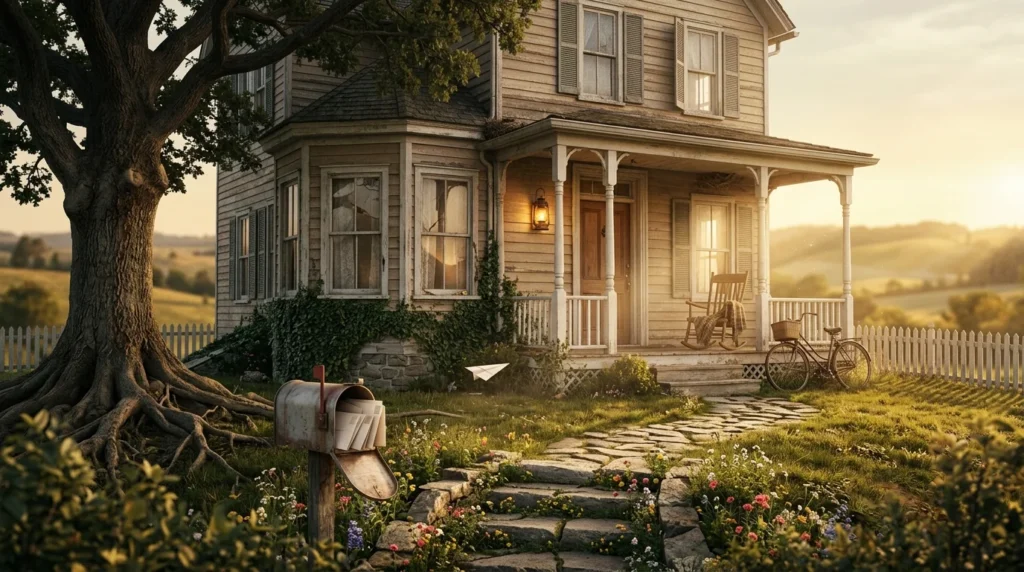
An old house is more than weathered wood, creaking floors, and faded paint. It can symbolize memories, history, resilience, loneliness, wisdom, or the passage of time. That’s why writers often use a metaphor for old house to add emotional depth and vivid imagery to stories, poems, speeches, and essays.
Instead of simply describing an aging building, a metaphor transforms it into something readers can connect with on a deeper level. An old house can become a forgotten diary, a silent witness, or a tired guardian of the past.
In this guide, you’ll learn what an old house metaphor is, why it’s effective, and explore 180+ creative metaphors organized by theme. You’ll also find writing tips, sentence examples, and answers to common questions.
What Is a Metaphor for an Old House?
Quick Answer: A metaphor for an old house is a direct comparison that describes an old house as something else to highlight its age, history, beauty, strength, or emotional significance.
For example:
- A time capsule
- A silent storyteller
- A wrinkled face of history
- A forgotten diary
- A guardian of memories
Each metaphor reveals a different aspect of what an old house can represent.
Why Writers Use Old House Metaphors
Old houses often symbolize:
- History
- Family memories
- Wisdom
- Change
- Survival
- Loneliness
- Mystery
- Nostalgia
- Endurance
- Hidden stories
These metaphors help readers see the house as more than just a building.
180+ Metaphors for Old House
Time and History Metaphors
- A time capsule
- A forgotten diary
- A living museum
- History’s bookshelf
- A weathered calendar
- Yesterday standing still
- A chapter from another age
- A dusty history book
- A frozen moment
- A memory carved in wood
- Time’s fingerprint
- A page from the past
- A ticking memory
- A window into history
- Yesterday’s heartbeat
- An aging photograph
- Time wrapped in brick
- A preserved memory
- A monument to yesterday
- History wearing a roof
Human Metaphors
- A wrinkled face
- An elderly guardian
- A silent grandfather
- An old storyteller
- A patient elder
- A tired soul
- A wise neighbor
- A retired giant
- An aging artist
- A weathered traveler
- A quiet listener
- A scarred survivor
- A gentle teacher
- A lonely elder
- A faithful friend
- A humble witness
- A resting dreamer
- A thoughtful historian
- An old heart still beating
- A lifetime in bricks
Nature Metaphors
- A weathered oak
- A fading autumn leaf
- A moss-covered stone
- A sleeping forest
- An ancient tree
- A river of memories
- A mountain weathered by storms
- A fading flower
- A nest abandoned by spring
- A tree with deep roots
- A worn cliff
- An old vineyard
- A quiet valley
- A fallen branch
- A patient mountain
- Nature’s memory
- A forest elder
- A winter garden
- An evergreen survivor
- A rooted giant
Memory and Emotion Metaphors
- A treasure chest of memories
- A family scrapbook
- A heart full of echoes
- A room filled with laughter
- A forgotten lullaby
- A chest of secrets
- A silent photograph
- Love frozen in time
- An echo chamber
- A keeper of dreams
- A box of forgotten letters
- A memory bank
- A faded postcard
- A heart with many rooms
- An invisible embrace
- A whisper from yesterday
- A collection of goodbyes
- A forgotten hug
- A home stitched from memories
- A museum of emotions
Literary Metaphors
- A novel with missing pages
- A poem written in brick
- A story waiting to be told
- A library without readers
- A forgotten manuscript
- A timeless chapter
- A worn journal
- A sentence carved in stone
- An unfinished novel
- A storyteller without words
- Poetry with walls
- A living legend
- A tale beneath the roof
- A verse surviving the years
- A book that breathes
- A script of generations
- A classic never rewritten
- A paragraph of history
- A silent biography
- A story preserved in wood
Guardian and Protector Metaphors
- A faithful guardian
- A watchful sentinel
- A silent protector
- A castle of memories
- A keeper of family history
- A shelter through storms
- A lighthouse of the past
- A guardian of generations
- A safe harbor
- A shield against time
- A patient watchtower
- A fortress of love
- A quiet defender
- A steadfast companion
- A protector of stories
- A roof of comfort
- A timeless refuge
- A loyal caretaker
- A gentle shield
- A guardian of forgotten voices
Mystery Metaphors
- A locked treasure chest
- A puzzle waiting to be solved
- A whisper in the dark
- A sleeping secret
- A forgotten kingdom
- A ghost of yesterday
- A hidden map
- A sealed letter
- A mystery wrapped in wood
- A silent riddle
- An unopened book
- A maze of memories
- A forgotten stage
- A shadow of history
- A room of unanswered questions
- A doorway to another time
- A sleeping legend
- A hidden chapter
- A quiet mystery
- A forgotten echo
Strength and Endurance Metaphors
- A stubborn oak
- A mountain standing firm
- A bridge through time
- A rock against the tide
- A survivor of storms
- A pillar of resilience
- A fortress against change
- A lighthouse in rough seas
- An anchor in history
- A shield against the years
- A warrior at rest
- A giant refusing to fall
- A castle of endurance
- A timeless foundation
- A steady heartbeat
- A monument to resilience
- A survivor carved in stone
- A wall against time
- An unbroken chain
- A lasting legacy
Symbolic Metaphors
- A bridge to the past
- A cradle of memories
- A mirror of generations
- A doorway to yesterday
- A family tree with walls
- A woven tapestry
- A candle still burning
- A quiet heartbeat
- A home frozen in time
- A thread connecting generations
- A compass pointing home
- A key to the past
- A nest of memories
- A monument to love
- A silent embrace
- A tapestry of lives
- A patchwork quilt
- A circle of generations
- A lantern for memories
- A timeless anchor
Metaphor vs. Simile
Quick Answer: A metaphor says the old house is something else, while a simile compares it using like or as.
| Metaphor | Simile |
|---|---|
| The old house was a time capsule. | The old house was like a time capsule. |
| The cottage became a silent storyteller. | The cottage was like a silent storyteller. |
| The farmhouse was a weathered oak. | The farmhouse stood like a weathered oak. |
| The mansion was a forgotten diary. | The mansion was like a forgotten diary. |
How to Choose the Right Old House Metaphor
| Writing Purpose | Best Style |
|---|---|
| Fiction | Emotional and descriptive |
| Poetry | Symbolic and lyrical |
| Essays | Reflective and meaningful |
| Speeches | Inspiring and memorable |
| Memoirs | Nostalgic and personal |
Examples in Sentences
- The old farmhouse stood as a silent storyteller, holding generations of family memories.
- Her grandmother’s cottage was a treasure chest of memories, filled with laughter and love.
- The abandoned mansion became a forgotten diary, its cracked walls preserving stories no one remembered.
- The weathered cabin was a stubborn oak, refusing to surrender to time.
- Every creaking floorboard echoed from a living museum of forgotten days.
- The house served as a bridge to the past, connecting the family to its roots.
- Its faded wallpaper became a poem written in brick and wood.
- The porch remained a faithful guardian, welcoming every generation home.
- The empty rooms felt like a library without readers, filled with untold stories.
- The old home rested on the hill, a lighthouse of memory guiding hearts back to where they belonged.
Tips for Creating Your Own Old House Metaphors
- Think about what the house represents—history, family, mystery, or endurance.
- Draw inspiration from nature, people, books, or treasured objects.
- Match the metaphor to the mood of your writing.
- Keep the comparison simple and emotionally meaningful.
- Avoid mixing too many metaphors in one description.
Common Mistakes to Avoid
- Using overly familiar clichés without adding fresh detail.
- Combining unrelated images in the same sentence.
- Focusing only on age instead of symbolic meaning.
- Repeating the same metaphor throughout your writing.
- Making the metaphor too abstract for readers to visualize.
Frequently Asked Questions
What is the best metaphor for an old house?
“A time capsule” is one of the strongest metaphors because it suggests that an old house preserves memories, history, and the spirit of another era.
Why do writers compare old houses to people?
Old houses often seem to age, endure hardships, and carry memories, making human characteristics a natural and meaningful comparison.
Can old house metaphors be used in poetry?
Yes. They are especially effective in poetry because they evoke nostalgia, resilience, and the passage of time.
What’s the difference between a metaphor and a simile?
A metaphor makes a direct comparison, while a simile uses like or as.
Are these metaphors suitable for fiction?
Absolutely. They work well in historical fiction, literary fiction, mystery novels, and family dramas.
How do I create my own metaphor for an old house?
Think about the feeling the house gives you—comfort, mystery, history, or loneliness—and compare it directly to something that evokes the same emotion.
Can an old house symbolize family?
Yes. Many writers use old houses as symbols of family roots, shared memories, traditions, and generational connections.
Why are old houses common literary symbols?
Because they naturally represent time, memory, identity, change, and the stories that remain long after people have gone.
Conclusion
A meaningful metaphor for old house can turn an ordinary building into a symbol of memory, resilience, mystery, or love. Whether you describe it as a time capsule, a silent storyteller, a weathered oak, or a guardian of generations, the right metaphor helps readers connect with the emotions hidden within its walls. By choosing imagery that matches your story or message, you can make an old house feel alive—not just as a place, but as a keeper of history and the lives it has quietly witnessed.