
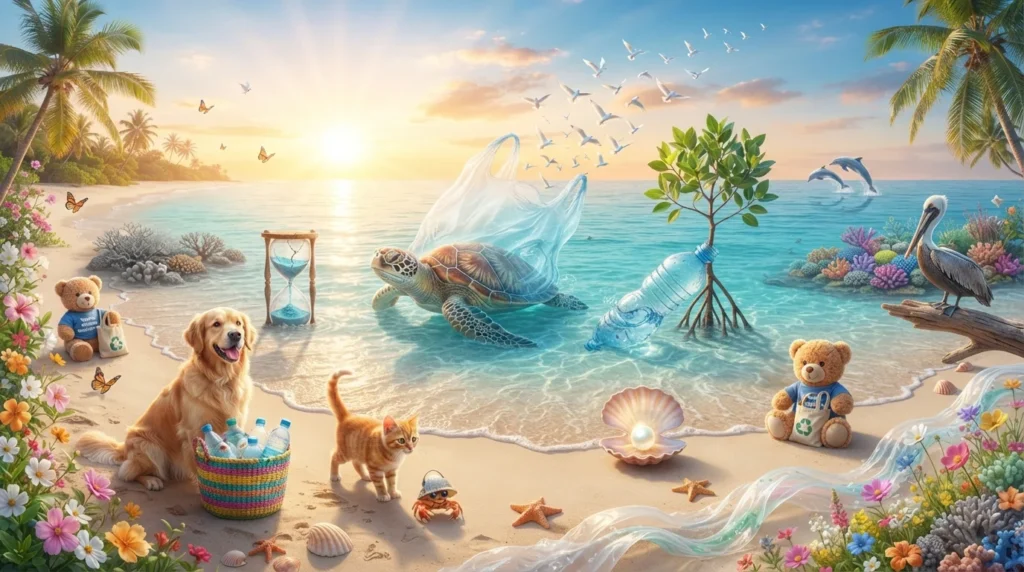
Plastic pollution has become one of the world’s biggest environmental challenges. From oceans and rivers to forests and city streets, discarded plastic affects wildlife, ecosystems, and human health. Because the problem is complex, writers often use a metaphor for plastic pollution to explain its scale and impact in a vivid, memorable way.
A powerful metaphor can portray plastic pollution as a silent invader, a choking blanket, or a tide that never stops rising. These comparisons help readers understand not only the physical damage but also the long-term consequences for nature and future generations.
Whether you’re writing an essay, speech, blog post, article, or environmental campaign, this collection of 180+ creative metaphors can strengthen your message.
What Is a Metaphor for Plastic Pollution?
Quick Answer: A metaphor for plastic pollution is a direct comparison that describes plastic waste as something else to emphasize its persistence, spread, environmental harm, or impact on living things.
For example:
- A plastic plague
- A choking blanket
- A tide of trash
- An invisible enemy
- A web trapping the planet
Each metaphor highlights a different aspect of the problem.
Why Writers Use Plastic Pollution Metaphors
Plastic pollution metaphors can symbolize:
- Environmental damage
- Human responsibility
- Overconsumption
- Long-lasting waste
- Harm to wildlife
- Ocean pollution
- Climate challenges
- Neglect
- Urgency
- Hope through action
Metaphors help transform scientific and environmental concepts into images readers can easily understand.
Metaphor for Plastic Pollution
Ocean and Water Metaphors
- A tide of trash
- A sea of plastic
- A river of waste
- An ocean choking on plastic
- A plastic tsunami
- A floating graveyard
- A wave of pollution
- A flood that never recedes
- A poisoned tide
- A plastic current
- A drifting island of waste
- A sea of forgotten bottles
- A storm of litter
- A polluted stream
- A waterfall of waste
- A plastic whirlpool
- A drowning coastline
- A river carrying scars
- A poisoned harbor
- An endless tide
Nature Metaphors
- A choking blanket
- A forest wrapped in plastic
- A vine of waste
- A poisonous weed
- A disease spreading through nature
- A wound on the Earth
- A scar across the landscape
- A dying garden
- A cracked ecosystem
- A smothering fog
- A parasite feeding on nature
- A thorn in the planet’s side
- A wilted forest
- A suffocating vine
- A blight on the land
- A withering meadow
- A poisoned root
- A tree buried in waste
- A silent infection
- A forest gasping for air
Disease and Health Metaphors
- A plastic plague
- A silent epidemic
- A chronic illness
- A spreading infection
- A slow poison
- A cancer on ecosystems
- A fever consuming the planet
- A toxic wound
- A lingering sickness
- A scar that won’t heal
- A virus of waste
- A persistent disease
- A contaminated bloodstream
- A toxic scar
- A hidden illness
- A wound left untreated
- A sickness without borders
- A planet running a fever
- A poisoned pulse
- A lasting infection
Monster and Creature Metaphors
- A hungry monster
- A plastic beast
- A silent predator
- A giant octopus of waste
- A dragon of pollution
- A serpent wrapping the Earth
- A monster with endless mouths
- A creature that never sleeps
- A shadow stalking nature
- A giant web trapping wildlife
- A swallowing giant
- A many-headed monster
- A lurking predator
- A plastic giant
- A creeping beast
- A relentless hunter
- A monster beneath the waves
- A giant shadow
- An invisible predator
- A monster feeding on oceans
Prison and Trap Metaphors
- A web trapping the planet
- Invisible chains
- A cage around wildlife
- A plastic prison
- A net that never loosens
- A trap beneath the waves
- A tightening knot
- A maze of waste
- A locked future
- A shrinking cage
- A snare for sea life
- A chain around nature
- A prison without walls
- A tangled web
- A noose around ecosystems
- A sealed box
- A trap disguised as convenience
- A locked doorway to sustainability
- A cage built by consumption
- A tightening grip
Human Impact Metaphors
- Humanity’s footprint in plastic
- A legacy of litter
- A mirror of consumption
- A debt to future generations
- A stain on civilization
- A monument to waste
- A mountain of convenience
- A bill left unpaid
- A shadow over progress
- A ticking environmental clock
- A reminder of excess
- A trail of neglect
- A burden we created
- A scar left by modern life
- A price tag on convenience
- A mountain we keep climbing
- A suitcase we cannot put down
- A weight on the planet
- A mark on history
- A story written in plastic
Light and Darkness Metaphors
- A shadow over the oceans
- A dark cloud of waste
- A fading light for wildlife
- A dim future
- A black tide
- A curtain hiding nature
- A cloud of pollution
- A fading beacon
- A dark stain
- An eclipse of ecosystems
- A night that lingers
- A veil over biodiversity
- A dimming horizon
- A light struggling to shine
- A shadow stretching farther
- A fading sunrise
- A cloudy tomorrow
- A dark wave
- A gray future
- A horizon covered in waste
Literary Metaphors
- A chapter of neglect
- A story of excess
- A page stained with plastic
- A novel without an ending
- A poem of pollution
- A tale of forgotten responsibility
- A chapter waiting to be rewritten
- A book of consequences
- A warning written in waste
- A script of overconsumption
- A silent narrative
- A page torn from nature
- An unfinished story
- A tragedy unfolding
- A cautionary tale
- A forgotten promise
- A story that echoes
- A paragraph of responsibility
- A book filled with plastic
- A final chapter unless we change
Symbolic Metaphors
- A ticking time bomb
- A double-edged sword
- A ripple becoming a wave
- A bridge to a cleaner future
- A seed of change
- A wake-up call
- A crossroads for humanity
- A chain reaction
- A heavy backpack
- A burden on tomorrow
- A cracked mirror
- A warning bell
- A broken promise to nature
- A mountain of choices
- A road to renewal
- A spark for change
- A compass pointing toward sustainability
- A turning point
- A challenge waiting to be solved
- A test of responsibility
Metaphor vs. Simile
Quick Answer: A metaphor directly compares plastic pollution to something else, while a simile uses like or as.
| Metaphor | Simile |
|---|---|
| Plastic pollution is a choking blanket. | Plastic pollution is like a choking blanket. |
| It became a plastic plague. | It spread like a plague. |
| The ocean is a sea of plastic. | The ocean looks like a sea of plastic. |
| Waste formed a prison for wildlife. | Waste trapped wildlife like a prison. |
How to Choose the Right Metaphor
| Purpose | Best Style |
|---|---|
| School essay | Clear and educational |
| Environmental speech | Inspiring and persuasive |
| Blog post | Visual and engaging |
| Poetry | Emotional and symbolic |
| Awareness campaign | Memorable and impactful |
Examples in Sentences
- Plastic pollution has become a choking blanket, smothering ecosystems around the world.
- Discarded bottles formed a tide of trash that stretched across the shoreline.
- Single-use plastics act like a slow poison, remaining in the environment for decades.
- The growing waste crisis is a ticking environmental clock, reminding us that action cannot wait.
- For many marine animals, floating plastic becomes an invisible trap hidden beneath the waves.
- Our dependence on disposable products has created a mountain of convenience with lasting consequences.
- Every piece of litter adds another thread to a web trapping the planet.
- Plastic waste has become a scar on the Earth, visible in even the most remote places.
- The pollution crisis is a story written in plastic, reflecting years of unsustainable habits.
- Choosing reusable alternatives can become a bridge to a cleaner future.
Tips for Creating Your Own Plastic Pollution Metaphors
- Focus on one central idea, such as persistence, harm, or hope.
- Use imagery that readers can immediately picture.
- Match the metaphor to the tone of your writing.
- Avoid mixing unrelated metaphors.
- Balance urgency with constructive solutions when appropriate.
Common Mistakes to Avoid
- Overusing dramatic imagery without supporting facts.
- Mixing multiple metaphors in one sentence.
- Choosing comparisons that distract from the message.
- Repeating the same metaphor throughout your writing.
- Ignoring hopeful or solution-focused imagery when discussing environmental action.
Frequently Asked Questions
What is the best metaphor for plastic pollution?
“A choking blanket” is one of the strongest metaphors because it vividly illustrates how plastic waste can smother ecosystems and harm wildlife.
Why do writers use metaphors for plastic pollution?
Metaphors make environmental issues easier to understand by turning abstract problems into vivid, memorable images.
Can these metaphors be used in speeches?
Yes. They are effective in speeches, essays, campaigns, presentations, and educational materials.
What’s the difference between a metaphor and a simile?
A metaphor makes a direct comparison, while a simile uses like or as.
Are these metaphors appropriate for students?
Absolutely. Many of these examples are suitable for school assignments, environmental clubs, and classroom discussions.
How do I create my own metaphor?
Choose a key quality—such as persistence, spread, or environmental harm—and compare plastic pollution directly to something with similar characteristics.
Why are disease metaphors common?
Because plastic pollution can spread widely, persist over time, and damage ecosystems, disease imagery is often used to emphasize its long-term impact.
Can metaphors also inspire solutions?
Yes. Metaphors such as “a bridge to a cleaner future” or “a seed of change” encourage hope and action alongside awareness.
Conclusion
A meaningful metaphor for plastic pollution can help readers better understand the scale and seriousness of this global challenge. Whether you describe it as a choking blanket, a tide of trash, a plastic plague, or a web trapping the planet, the right metaphor makes complex environmental issues more relatable and memorable. By combining vivid imagery with thoughtful discussion, your writing can both inform readers and inspire positive action toward a cleaner, healthier world.