

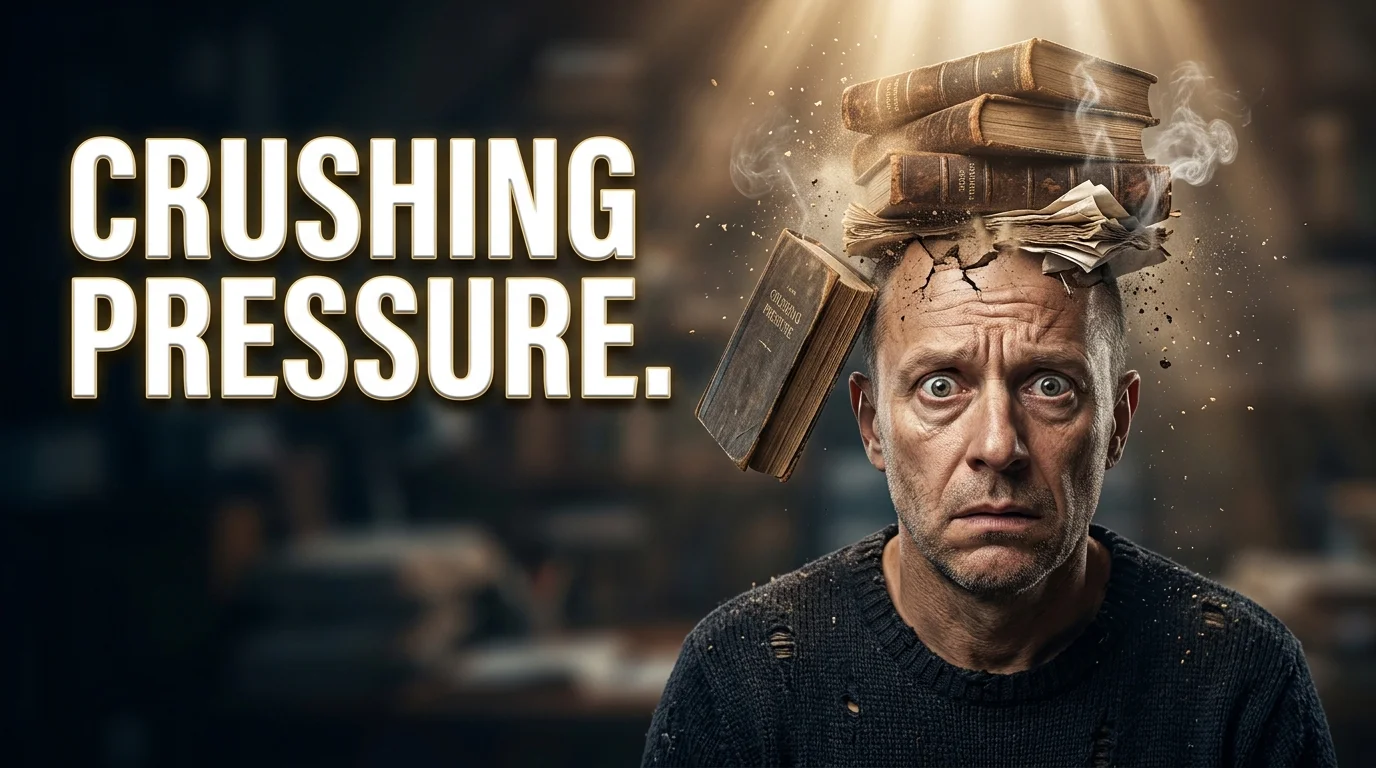
What Is a Metaphor for Stressed?
A metaphor for stressed is a way of describing emotional pressure by comparing it to something physical or visual. Instead of directly naming stress, you show it through images.
For example, saying “I am a ticking time bomb” suggests tension building inside a person. It helps readers feel the intensity without needing a long explanation.
Writers use this technique in stories, poetry, and everyday speech. It makes emotional experiences easier to understand and more powerful to read.
Stress itself is invisible, but metaphors give it shape, sound, and movement in the reader’s mind.
Quick List of Metaphors for Stressed Examples
- A pressure cooker ready to explode — emotions building up inside
- A tangled ball of yarn — thoughts mixed and confusing
- A storm inside the mind — emotional chaos and unrest
- A tight rope stretching thin — feeling close to breaking
- A ticking clock with no pause — constant urgency and pressure
- A burning candle melting too fast — energy draining quickly
- A crowded highway at rush hour — too many thoughts at once
- A backpack full of stones — emotional weight pulling down
- A cracked glass under pressure — fragile emotional state
- A computer with too many tabs open — mental overload
- A drowning swimmer in waves — overwhelmed by responsibilities
- A balloon stretched to its limit — nearing emotional breakdown
- A runaway train — thoughts moving too fast to control
- A maze with no exit — feeling mentally trapped
- A rope fraying at the ends — losing emotional strength
- A buzzing beehive in the brain — constant mental noise
- A stormy sea with no shore — endless emotional turbulence
- A stretched rubber band — close to snapping point
- A furnace burning nonstop — constant mental pressure
- A sinking ship of thoughts — losing control slowly
Beautiful Metaphors for Stress
Stress often feels like nature in chaos. Writers use strong imagery to capture it:
- A thundercloud sitting over your mind
- A volcano waiting for eruption
- A winter wind cutting through thoughts
- A wildfire spreading in silence
- A dark tunnel with no light ahead
These metaphors show emotional depth. They help readers feel what the writer cannot directly explain.
Poetic and Deep Ideas for Stress
In creative writing, stress becomes symbolic:
- Stress as a shadow that follows you everywhere
- Stress as ink spilling over clean pages
- Stress as a broken compass losing direction
- Stress as fog hiding the road ahead
- Stress as chains wrapped around thoughts
Such imagery is often used in poetry and reflective writing. It adds emotional weight and beauty to simple feelings.
Metaphor for Stress in Creative Writing
Writers use stress metaphors in many ways:
In stories:
“The pressure in his chest was a storm trapped inside a glass jar.”
In poetry:
“My thoughts are stars fading in a stormy sky.”
In school writing:
“Stress is a backpack filled with heavy books I cannot put down.”
These expressions help readers connect emotionally with characters and situations.
Metaphor vs Simile
| Aspect | Metaphor | Simile |
|---|---|---|
| Meaning | Direct comparison | Uses “like” or “as” |
| Example | Stress is a storm | Stress is like a storm |
| Impact | Stronger, deeper image | Clear and simple |
| Emotion | More intense | More descriptive |
| Common mistake | Overuse of complexity | Too literal comparison |
Why People Confuse Metaphors and Similes
Many beginners mix them because both compare feelings. In school, students often learn them together, which creates confusion.
A metaphor says something is something else. A simile says it is like something else. The difference is small but powerful in writing.
Once you understand this, your creative writing becomes clearer and more expressive.
Real-Life Conversation Examples
1. School scenario:
“I have so much homework, my brain is a pressure cooker.”
🎯 Lesson: Stress can be shown through strong imagery.
2. Classroom discussion:
“Her stress is like a storm before exams.”
🎯 Lesson: Similes and metaphors both describe emotion.
3. Social media caption:
“Today my mind feels like a tangled web.”
🎯 Lesson: Short metaphors work well in captions.
4. Poetry writing:
“My thoughts are burning candles in the wind.”
🎯 Lesson: Metaphors create emotional depth.
How to Create Your Own Metaphor for Stressed
Start by asking simple questions:
- What does stress feel like in your body?
- Is it heavy, fast, loud, or messy?
- What object or scene feels similar?
Then match emotions with images:
- Pressure → pressure cooker
- Chaos → storm or traffic
- Overload → overloaded machine
This method helps you build strong, natural metaphors without forcing creativity.
Common Mistakes Beginners Make
Mistake: Using very complex images
Why: It confuses the reader
Correction: Keep metaphors simple and clear
Mistake: Mixing too many ideas
Why: Weakens emotional impact
Correction: Focus on one strong image
Mistake: Being too literal
Why: Reduces creativity
Correction: Use imagination, not explanation
Related Figurative Language Terms
- Simile — comparison using “like” or “as”
- Imagery — language that creates pictures in the mind
- Personification — giving human traits to objects
- Symbolism — using objects to represent ideas
- Hyperbole — extreme exaggeration for effect
These tools help make writing richer and more expressive.