
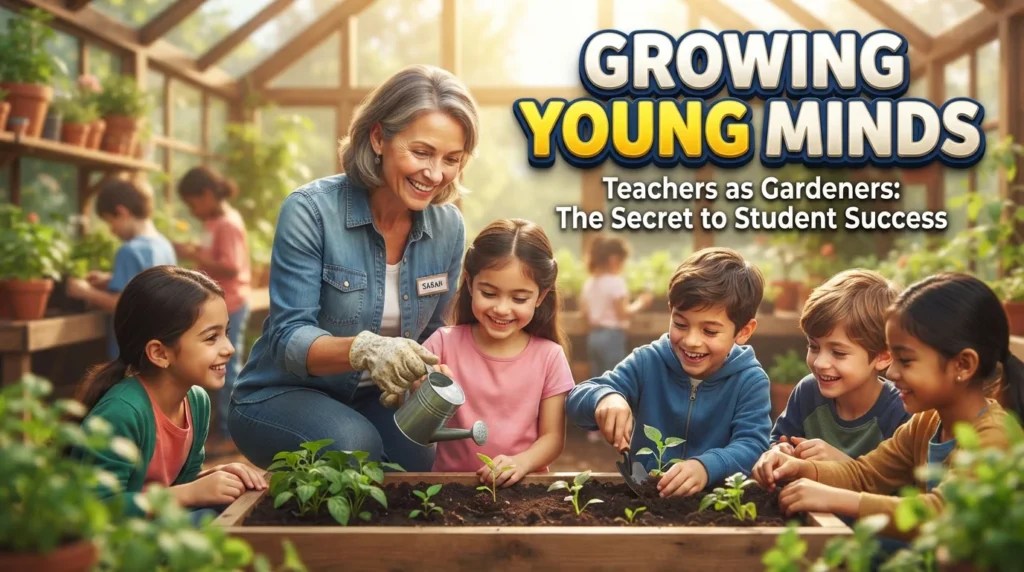
A metaphor for teachers as gardeners shows teachers as people who plant ideas, nurture growth, and help students develop their unique potential. Like gardeners who care for plants with patience and attention, teachers create the right conditions for learning, confidence, and personal growth.
Many writers, educators, and speakers use this metaphor because it captures the deeper purpose of teaching. A teacher does not simply deliver information; they cultivate curiosity, encourage creativity, and support students as they grow into capable individuals.
In this article, we will explore the meaning behind the teacher-as-gardener metaphor, why it is powerful, different examples you can use in writing or speeches, and how this comparison reflects the true role of educators.
What Is the Metaphor for Teachers as Gardeners?
A metaphor for teachers as gardeners compares educators to gardeners who plant knowledge, nurture talents, remove obstacles, and help students grow.
This metaphor suggests that students are like seeds. Each student has hidden potential, but they need care, guidance, time, and the right environment to flourish.
A gardener cannot force a flower to bloom instantly. They provide sunlight, water, nutrients, and protection while allowing nature to take its course. Similarly, teachers cannot rush learning. They guide students, encourage progress, and create opportunities for success.
The metaphor highlights important qualities of great teachers:
- Patience
- Care
- Encouragement
- Guidance
- Understanding
- Commitment to growth
Why Are Teachers Compared to Gardeners?
Teachers and gardeners share many similarities. Both work with living things that require attention, patience, and support.
| Gardeners | Teachers |
|---|---|
| Plant seeds | Introduce new ideas |
| Water plants | Provide encouragement |
| Remove weeds | Help overcome challenges |
| Provide sunlight | Inspire confidence |
| Create healthy environments | Build supportive classrooms |
| Watch plants grow | Celebrate student progress |
A gardener understands that every plant grows differently. Likewise, a teacher recognizes that every student learns at their own pace and has different strengths.
The Deeper Meaning Behind the Teacher-Gardener Metaphor
The teacher-as-gardener metaphor represents the idea that education is a process of cultivation rather than simple instruction.
A teacher plants the seeds of:
- Knowledge
- Imagination
- Critical thinking
- Confidence
- Responsibility
- Creativity
Over time, these seeds develop into skills, values, and ideas that students carry throughout life.
A great teacher does not just focus on what students know today. They think about what students can become tomorrow.
Examples of Teachers as Gardeners Metaphors
Here are some creative examples of this metaphor:
1. “Teachers are gardeners who plant seeds of knowledge that bloom into lifelong wisdom.”
This example emphasizes how education creates lasting impact. Lessons learned in school often continue influencing students years later.
2. “A teacher’s classroom is a garden where young minds grow, explore, and discover their potential.”
This comparison presents the classroom as a place filled with opportunities for development.
3. “Teachers are gardeners of the human spirit, nurturing curiosity and helping dreams take root.”
This metaphor focuses on emotional growth and personal development.
4. “Every teacher carries a watering can filled with encouragement, patience, and inspiration.”
This creates a visual image of teachers providing the support students need.
5. “Teachers plant ideas today that become the forests of tomorrow.”
This metaphor shows how education can influence future generations.
How Teachers Act Like Gardeners in Real Life
They Plant Seeds of Knowledge
Gardeners begin with seeds, and teachers begin with ideas. Every lesson introduces students to new concepts that may grow into deeper understanding later.
For example, a science teacher introducing environmental topics may inspire a student to become a future researcher or conservationist.
They Provide the Right Environment
Plants need healthy soil, water, and sunlight. Students need a safe and encouraging environment where they feel comfortable asking questions and making mistakes.
A supportive classroom helps students develop confidence and curiosity.
They Remove Barriers to Growth
Gardeners remove weeds that prevent plants from thriving. Teachers help students overcome obstacles such as confusion, self-doubt, or learning difficulties.
They provide explanations, feedback, and encouragement to help students improve.
They Understand Individual Growth
Not every flower blooms at the same time. Similarly, students develop different skills at different speeds.
A patient teacher understands that learning is a journey rather than a race.
Short Metaphors for Teachers as Gardeners
If you need a quick metaphor for an essay, speech, or caption, these examples work well:
- Teachers are gardeners of young minds.
- Teachers plant the seeds of tomorrow.
- Educators cultivate curiosity like gardeners nurture flowers.
- Teachers grow possibilities from tiny seeds of knowledge.
- A classroom is a garden where ideas blossom.
- Teachers are caretakers of intellectual gardens.
- Great teachers cultivate dreams into reality.
- Teachers grow thinkers, creators, and leaders.
Teacher as Gardener Metaphor in Literature and Speeches
The gardener metaphor appears frequently in education because it creates a powerful emotional connection.
A teacher is rarely compared to a machine that transfers information. Instead, teachers are compared to gardeners, builders, guides, and artists because their work involves patience, creativity, and human connection.
When used in speeches, this metaphor helps audiences understand that teaching is about shaping lives, not just completing lessons.
Common Mistakes When Using This Metaphor
While the teacher-as-gardener metaphor is meaningful, it should be used thoughtfully.
Mistake 1: Suggesting Students Have No Role
A gardener supports growth, but plants also grow through their own natural processes. Similarly, students actively participate in their own learning.
Mistake 2: Making Teaching Sound Too Simple
Growing a garden requires skill, knowledge, and constant adjustment. Teaching is equally complex and requires expertise.
Mistake 3: Ignoring Student Differences
A garden contains different types of plants. A classroom contains different personalities, abilities, and learning styles.
The best teachers adapt their approach to meet individual needs.
Other Related Metaphors for Teachers
Teachers can also be compared to:
Teachers as Builders
Teachers build strong foundations of knowledge and character.
Teachers as Lighthouse Keepers
Teachers guide students through uncertainty and help them find direction.
Teachers as Coaches
Teachers encourage improvement, practice, and achievement.
Teachers as Artists
Teachers create meaningful learning experiences through creativity and imagination.
FAQ: Metaphor for Teachers as Gardeners
Why are teachers compared to gardeners?
Teachers are compared to gardeners because both nurture growth, provide support, and create conditions where living things can develop successfully.
What does the seed represent in the teacher-gardener metaphor?
The seed represents a student’s potential, ideas, talents, and abilities waiting to be developed.
What does watering represent in this metaphor?
Watering represents encouragement, guidance, feedback, and continuous support from teachers.
What does the garden represent in education?
The garden represents the learning environment where students develop knowledge, skills, confidence, and character.
Is “teachers are gardeners” a metaphor or a simile?
“Teachers are gardeners” is a metaphor because it directly compares teachers to gardeners without using words like “like” or “as.”
How can I use this metaphor in an essay?
You can use it to explain how teachers influence students by nurturing their abilities, encouraging growth, and helping them reach their potential.
What is a powerful one-line metaphor for teachers?
“Teachers are gardeners who cultivate the minds that will shape tomorrow’s world.”
Conclusion
The metaphor for teachers as gardeners beautifully captures the heart of education. Teachers do more than share information; they nurture curiosity, encourage growth, and help students discover their abilities.
Like gardeners caring for plants, educators provide patience, guidance, and support while allowing each learner to develop in their own unique way. The lessons teachers plant today can grow into confidence, creativity, and wisdom that last a lifetime.
A great teacher does not simply teach students—they cultivate the future.