
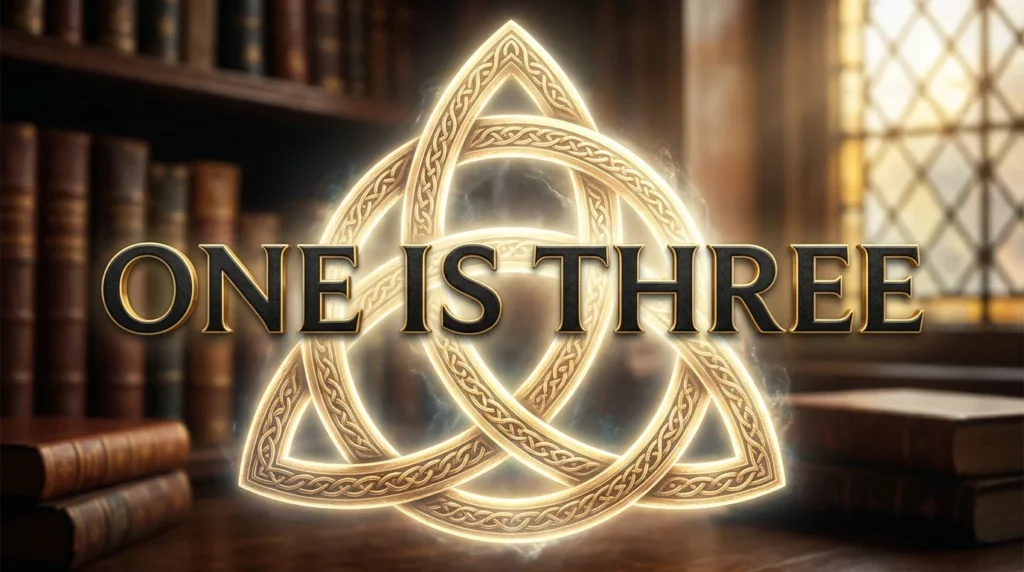
A metaphor for the Trinity helps people understand one of the most profound ideas in Christian faith: how God is Father, Son, and Holy Spirit, yet still one. Many learners, writers, and believers search for this topic because the idea feels deep, abstract, and sometimes hard to picture in everyday language.
Think of sitting in a classroom, trying to explain something invisible but powerful—like love, time, or light. The Trinity feels similar. It is real in meaning, but not easy to see with the eyes. That’s why metaphors become so important. They turn complex theology into simple, human images that the mind can hold.
The Trinity in Christianity refers to the belief in one God expressed in three persons: Holy Trinity. Writers, poets, and teachers often use metaphors to describe this mystery in ways that feel natural, emotional, and easy to remember.
In this guide, you will explore clear explanations, creative metaphors, poetic ideas, and simple examples that bring this concept to life.
A metaphor for the Trinity is a simple image or comparison used to explain how the Father, Son, and Holy Spirit are three distinct persons yet one unified God. It helps make a deep spiritual idea easier to understand through everyday objects like water, light, or a three-leaf clover.
What Is a Metaphor for the Trinity?
A metaphor for the Trinity is a way of explaining a complex spiritual truth using simple, familiar images. It does not mean the comparison is perfect. Instead, it helps the mind “see” something that cannot be physically seen.
In simple words, it means using everyday things to describe how three can be one.
For example, a single flame can give light, heat, and energy—different effects, but one source. Writers use such images to explain the idea of unity in diversity.
This is important in creative writing, descriptive writing, and poetic language, where abstract ideas need emotional clarity.
Quick List of Metaphor for the Trinity Examples
Here are simple and creative examples:
- Water (ice, liquid, steam) – one substance, three forms
- Sun (light, heat, energy) – one source, many expressions
- Three-leaf clover – separate leaves, one plant
- Egg (shell, white, yolk) – different parts, one egg
- Triangle – three sides, one shape
- Music chord – different notes, one harmony
- Fire (flame, heat, glow) – one fire, many effects
- Tree (roots, trunk, branches) – connected life system
- Light prism – one light, many colors
- Time (past, present, future) – one timeline
- Human (mind, body, spirit) – one being
- Ocean waves – many waves, one sea
- Cloth woven threads – many strands, one fabric
- Apple (skin, flesh, seed) – one fruit
- Wind (breeze, storm, gust) – one force, many forms
- Three candles burning together – separate flames, one glow
- Book (beginning, middle, end) – one story
- River system – streams joining one flow
- DNA strand – complex unity
- Music rhythm – layered beats, one song
Beautiful Metaphors for the Trinity
Some metaphors feel more emotional and poetic:
- Light breaking through a window
One light, many rays filling the room. - A single voice in harmony
Different tones blending into one sound. - The ocean meeting the sky
Boundaries fade, yet everything is connected. - A glowing ember
Heat, light, and spark come from one core. - A woven braid
Three strands become one strong unity.
These images help the mind feel the mystery instead of only thinking about it.
Poetic and Deep Trinity Ideas
In poetry and symbolism, the Trinity is often shown through nature and emotion:
- Morning, noon, and night as one day
- Seed, growth, and bloom as one life cycle
- Heartbeat, breath, and thought as one person
- Earth, sky, and sea as one world
These ideas highlight symbolism, imagery, and emotional imagery in writing. They turn theology into art.
Trinity in Creative Writing
In creative writing, metaphors for the Trinity can appear in stories, poems, and school essays.
Example in a story:
“The forest spoke in three voices—the whisper of leaves, the strength of roots, and the silence of standing trunks, yet it was one living soul.”
Example in poetry:
“One light, three flames dancing as one truth in the dark.”
In school writing, students often use simple comparisons like water or light to explain unity and diversity.
Metaphor vs Simile
| Aspect | Metaphor | Simile |
|---|---|---|
| Meaning | Direct comparison | Uses “like” or “as” |
| Grammar | “Trinity is water” | “Trinity is like water” |
| Impact | Strong, deep imagery | Clear, simple imagery |
| Example | God is light | God is like light |
| Common mistake | Confusing literal meaning | Overusing “like/as” |
Metaphors feel more powerful in poetic language, while similes are easier for beginners.
Why People Confuse Metaphors and Similes
Many learners mix them because both compare ideas. In school, students often remember the structure but forget the meaning.
Another reason is language habits. In daily speech, people say “like” often, so similes feel more natural. Metaphors require more imagination and visual thinking.
Once learners understand that metaphors are direct and similes are indirect, the confusion becomes much smaller.
Real-Life Conversation Examples
1. Classroom discussion
Student: “Is the Trinity like water?”
Teacher: “Yes, that’s a metaphor to help us understand unity.”
🎯 Lesson: Metaphors simplify deep ideas.
2. Poetry writing
Student: “I wrote the Trinity as a three-colored light.”
Teacher: “Good imagery, it shows unity in difference.”
🎯 Lesson: Creative writing uses symbols.
3. Social media caption
User: “Faith is like a threefold flame.”
Friend: “That’s a strong metaphor.”
🎯 Lesson: Modern writing uses figurative language.
4. Group study
Student: “Why not just say God is one?”
Teacher: “Because metaphors help us feel the meaning.”
🎯 Lesson: Imagery builds understanding.
How to Create Your Own Metaphor for the Trinity
- Think of something in nature
- Break it into three parts
- Find one shared source
- Link emotion to meaning
- Keep it simple and visual
Example: A river (source, flow, destination) → one water system, three experiences.
This builds strong descriptive writing skills and improves imagination.
Common Mistakes Beginners Make
- Making metaphors too complex → confusion instead of clarity
- Forcing unrelated ideas → weak meaning
- Forgetting unity → three parts feel separate
- Using too many comparisons → loses focus
Correction: Always choose one strong image that clearly shows unity.
Related Figurative Language Terms
- Simile – comparison using like/as
- Imagery – language that creates pictures
- Personification – giving human traits to objects
- Symbolism – using objects to represent ideas
- Hyperbole – extreme exaggeration
These tools strengthen literary devices and creative expression.
Frequently Asked Questions
1. What is a simple metaphor for the Trinity?
Water (ice, liquid, steam) is a common simple example.
2. Why do we use metaphors for the Trinity?
To make a deep spiritual idea easier to understand.
3. Are Trinity metaphors perfect?
No, they only help explain the idea, not fully define it.
4. What is the most common Trinity metaphor?
Water and light are the most used examples.
5. Can metaphors explain God fully?
No, they only give a simple human understanding.
6. Is Trinity a mystery in religion?
Yes, it is considered a divine mystery in Christian belief.
7. Can students use Trinity metaphors in essays?
Yes, they are often used in creative writing and theology.
8. What makes a good metaphor for the Trinity?
It should show unity, three parts, and one source clearly.
Conclusion
A metaphor for the Trinity helps turn a deep spiritual idea into something the human mind can picture. Through images like light, water, or nature, we begin to understand how three can exist as one without losing meaning or identity.
These comparisons are not perfect definitions, but they open doors to understanding. They strengthen creative writing, improve poetic language, and help learners connect emotionally with abstract ideas.
When you create your own metaphors, you are not just learning language—you are learning how to see the world in layers of meaning, where unity and diversity exist together in harmony.